


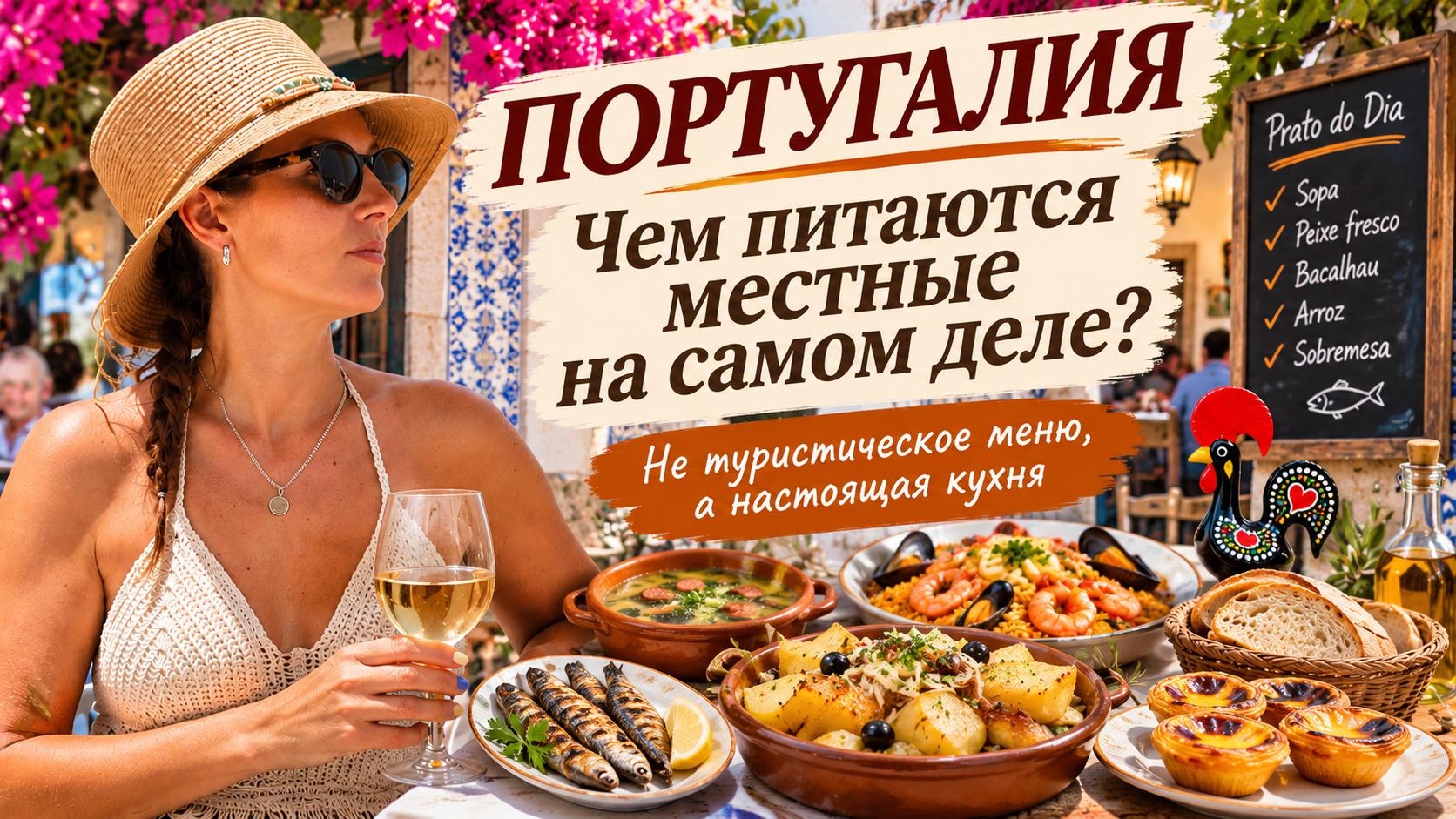
The menu for tourists and the plate for locals — in Portugal these are two different countries. Hi, it’s Mila again, and today I’ll tell you what Portuguese people really eat on an ordinary weekday: no glossy photos — simple soups, fish and rice, the things that make up the real family table. And along the way — what from this is worth repeating at home, in our own kitchen.
What’s behind the tourist façade
In a small town in central Portugal, the family restaurants feed you something quite different from what they serve on the squares with a view of the castle. Lunch for locals is the “prato do dia,” the dish of the day: soup, a main course, bread and water or a glass of wine at a fixed price. These places don’t advertise — a queue of working people at lunch is a fine guide. Inside — plain tablecloths, a big pot of soup and a waitress chatting with every second guest like an old acquaintance. This is exactly what everyday Portugal looks like, the Portugal you don’t see from the main square. And one more detail: in these places they pour “house wine” — simple table wine served with lunch without any ceremony, and it’s part of the plate, not a separate occasion.
Portugal’s everyday plate
- soups — every day: green caldo verde made from cabbage and potato, thick vegetable variations; soup here isn’t a “starter,” it’s the base of lunch;
- cod (bacalhau) — the main hero of the table: it’s salted, air-dried, stewed with onion and potato; they say there are more than a hundred recipes;
- fresh grilled fish — sardines, sea bream, mackerel: minimum seasoning, maximum fire and olive oil;
- rice — not a side, but a base: rice dishes with seafood are eaten with a spoon, almost like soup;
- dessert — modest: rice pudding with cinnamon or that famous pastel de nata with coffee;
- bread and cheese — no one sits down to the table without them: simple country bread and local cheeses made from sheep’s milk.
Why “tourist food” deceives
Along the waterfronts they sell you an “experience” — dinners with a view and marked-up prices. Meanwhile real Portuguese cuisine is modest and thrifty: it grew out of a peasant table where one pot of soup feeds the whole family and salted cod keeps for months. Even the sardines here are served with simple bread and a salad — and that’s a full dinner after which you want to sleep. To me there’s a lesson for all of us in this: the simpler the plate, the more honesty is in it. The tourist zones sell you a picture, while the real cuisine lives in the quarters where locals dine: same reason the prices are lower and the portions bigger there.
What I take to my own kitchen
Of all this, the closest to my heart is the idea of a daily soup and grilled fish with nothing extra: here on the Costa Blanca it’s part of everyday life too. I’ve broken down the fish topic in the article about fresh fish at Mercadona — the day’s catch, filleted right in front of you. And if you want a sweet finale in the Iberian spirit, take a look at my experience with the San Sebastián cheesecake: a Spanish dessert that gets along beautifully with Portuguese coffee. Of the simple “soup” habits, one more has stuck with me: cook soup right away for two days — lunch and the next evening are settled. And a small rule for everyday fish: minimum oil, minimum salt, maximum time over the flame — that works both in Portugal and at home with us.
In summary
Portuguese everyday food is about simplicity: soup every day, fish from the grill, rice instead of potatoes and dessert as a small celebration. You don’t need to go far for “exotic” — you need to go where locals eat )
And what do you cook from “peasant” dishes — soups, fish, rice? Share in the comments: let’s put together a list of simple ideas for an everyday dinner.



