


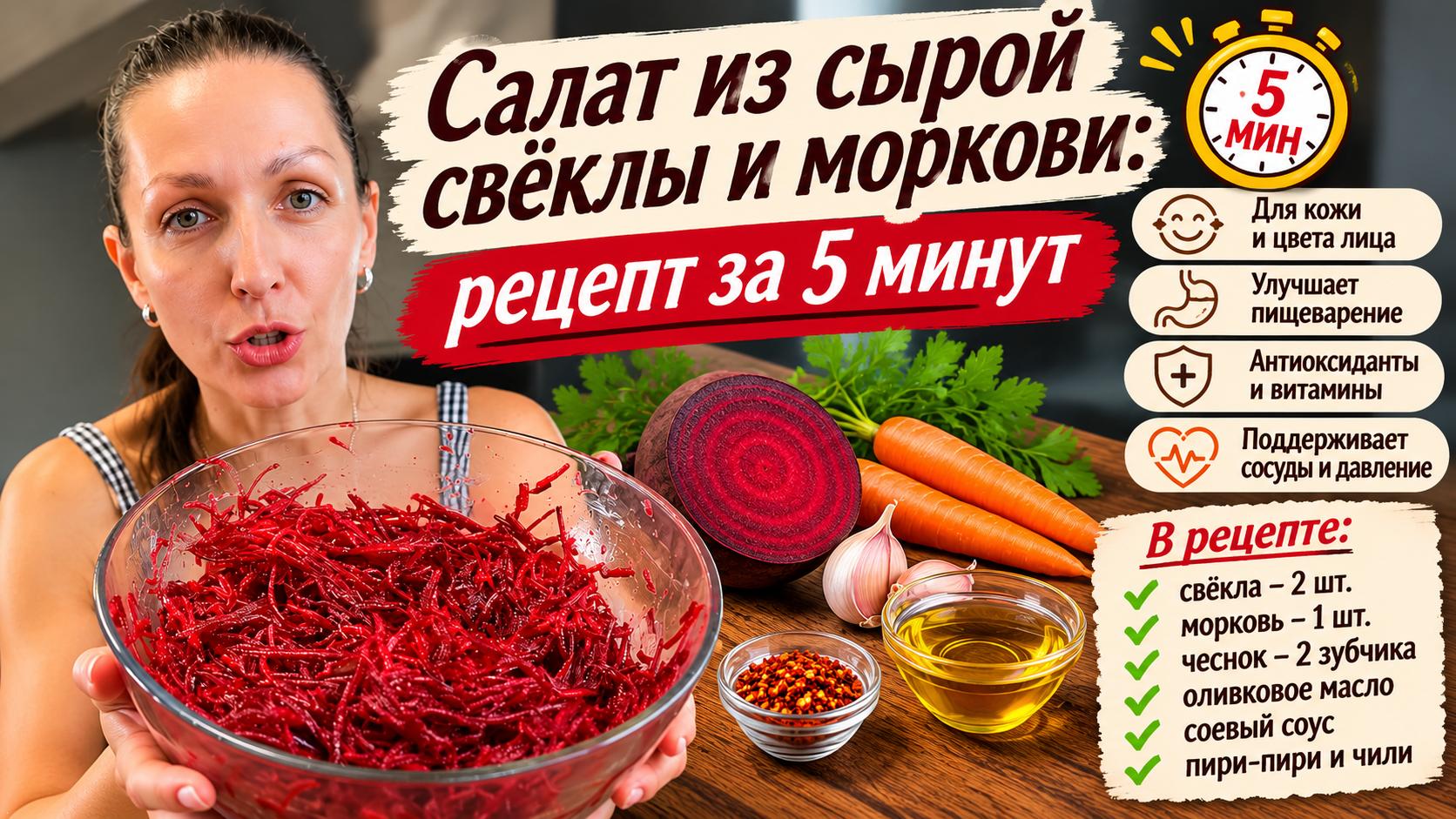
“I eat it for the sake of my skin. You’ve definitely never had a salad like this — it’s just out of this world” — that’s how I describe my vitamin salad of raw beetroot in the video. Hi, it’s Mila again, and today I’ll share this wonder recipe: four basic ingredients, a grater, five minutes — and on the table is a serving of fiber, beta-carotene and antioxidants working on your skin, digestion and gut. In the article — the exact recipe, the benefit of each component, and cautions without which raw beetroot is better left alone.
Recipe: exact proportions
- fresh beetroot — 2 pieces;
- fresh carrot — 1 piece;
- garlic — 2 cloves;
- olive oil — to taste;
- soy sauce — to taste;
- piri-piri and dried chili — for a bit of heat.
Grate the beetroot and carrot on a coarse grater, add the minced garlic, dress with olive oil, soy sauce and spices, and toss. I call the result “a whole basin of vitamin salad” and admit in the video: “It’s divine.”
Why raw beetroot is a story of its own
Cooked beetroot is a familiar guest at the table, but when it’s boiled, part of the vitamin arsenal goes into the cooking water. Raw beetroot keeps it all: betacyanins (antioxidant pigments that give beetroot its color), folate, potassium, vitamin C and nitrates, which the body converts into nitric oxide — a molecule that widens blood vessels. That’s exactly why beetroot is studied as a food for blood pressure and endurance: a glass of beetroot juice before a workout is a well-known trick among athletes.
I’ll name a practical everyday effect too: “If you don’t know how to improve your bowel movements — it’s fresh beetroot.” The fiber of the raw root works with volume and gently — the gut answers the same day.
The other components: briefly
- Carrot — beta-carotene, which the body synthesizes into vitamin A; important for skin and vision. The fat from the dressing is needed so the carotene is absorbed — the salad is built correctly.
- Garlic — sulfur compounds (allicin) with antimicrobial and vascular effects; also the main source of flavor.
- Olive oil — monounsaturated fats and polyphenols, a carrier for carotenoids.
- Soy sauce and chili — flavor and the capsaicin in the chili, which revs up metabolism.
Cautions: who should go easy on raw beetroot
- Sensitive gut. During a flare-up of gastritis, pancreatitis or IBS, raw root vegetables irritate — start with small portions or bake the beetroot.
- Salt. Soy sauce is a noticeable source of sodium; with hypertension, watch your total salt for the day — the sauce can be diluted with water or replaced with lemon.
- Oxalates. If you’re prone to kidney stones, large portions of raw beetroot shouldn’t be an everyday norm.
- Beeturia. Pink urine after beetroot is normal, not a scare — it’s the pigments.
How to fit the salad into your day
I eat a salad like this constantly — “piri-piri for a bit of heat, so it tastes good” — and I offer a broader idea: this isn’t a “diet dish,” it’s a way to eat raw vegetables every day without effort. The grater sits in plain sight, and two beetroot and a carrot are the week’s basic lineup. As a serving idea — a salad with lunch or dinner, a side for meat, part of a lunch bowl with a spoonful of magnesium mix on top.
The “food for skin” idea runs through my blog: if you want to continue, see the morning ritual with lemon and olive oil and sprouted fenugreek — three simple habits that add up to an eating system for skin and energy.
Cook it, try it and tell me: had you eaten raw beetroot before this? I’m genuinely interested in how you like the combination of beetroot with garlic and soy sauce — I read every review )


