


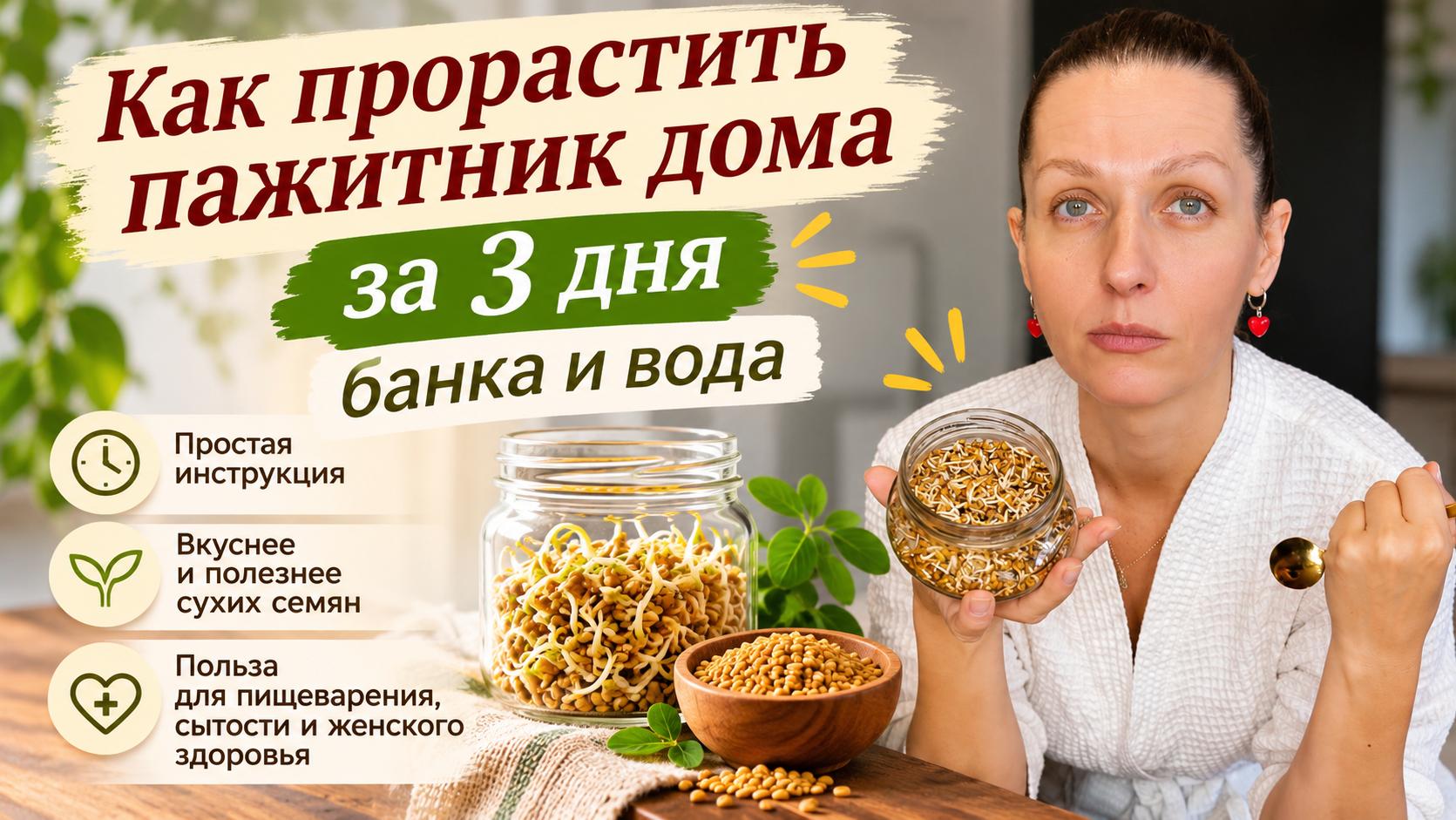
Dry fenugreek is so bitter you can barely put it in your mouth — but sprouted it turns sweet, tender and pleasant. Hi, I’m Mila! I get asked about this more than anything else, so today I’ll show my whole sprouting setup: you’ll need a jar, water and three days. You’ll get the exact instructions, the rules that save a harvest from mold, and you’ll understand why sprouts taste better and are more useful than dry seeds.
My step-by-step instructions
- I pour a few seeds into a separate small jar and add water so it just barely covers them.
- I cover it with a lid — not tightly: air has to get through, or the seeds will suffocate.
- I keep it at room temperature.
- On the third day the seeds swell and start growing — they’re ready.
- As the water evaporates, I don’t top it up “with a reserve”: if you cover them with water, they’ll start to rot. They should be almost dry, with just a bit of moisture at the edges.
Rules that save the harvest
The main enemy of sprouts is mold, and I have three protective rules, each with its own meaning:
- Always a clean spoon. I change the spoon with every touch: stray bacteria on wet seeds multiply fast — “otherwise they’ll start to mold and rot.”
- Water — the minimum. Seeds sitting in water rot; they sprout in moisture, not in a puddle.
- Air flow. The lid stays loose — the seeds need oxygen to breathe.
My portion is four teaspoons of dry seeds: that’s a jar that lasts my husband and me three days. We eat two little spoons a day.
Why sprouts taste better and are more useful than dry seeds
Dry fenugreek is a dense grain with bitter saponins: “if you just grind them, they’re bitter, bitter, even unpleasant.” Soaking starts the same thing that happens to any seed in nature: enzymes break down the stored compounds — starch into simple sugars (hence the sweetness), proteins into amino acids, and some of the “anti-nutrient” compounds that interfere with absorption break down too. I taste the result, and chemistry backs it up: when sprouting, the composition changes, and some nutrients become more available.
What makes fenugreek valuable by composition
Let me put the picture together point by point:
- Digestion — fiber that supports gut function;
- Appetite — helps you stay full longer;
- Blood sugar — fenugreek seeds are being studied for a possible effect on glucose levels;
- Women’s health — there are preliminary studies on a possible reduction of menstrual pain;
- Composition — plant protein, minerals and antioxidant compounds.
Notice how carefully I word things: “are being studied,” “preliminary studies” — that’s the honest level of the data. Fenugreek is food and a traditional spice, not a medicine. And a firm restriction: fenugreek is traditionally not recommended during pregnancy — it was used to stimulate labor. If you’re pregnant or taking blood-sugar-lowering medication, check with your doctor before adding it.
How I eat fenugreek sprouts
- two little spoons on their own — as a “green supplement” at breakfast;
- in salads — they go perfectly with a beetroot and carrot salad;
- along with a magnesium seed mix — the “seeds every day” rule takes care of itself.
Sprouting is generally the cheapest way to liven up your diet: a jar, seeds from the spice aisle and three days. If you have your own sprouting methods — share them in the comments, I collect folk experience and will definitely try them.


