


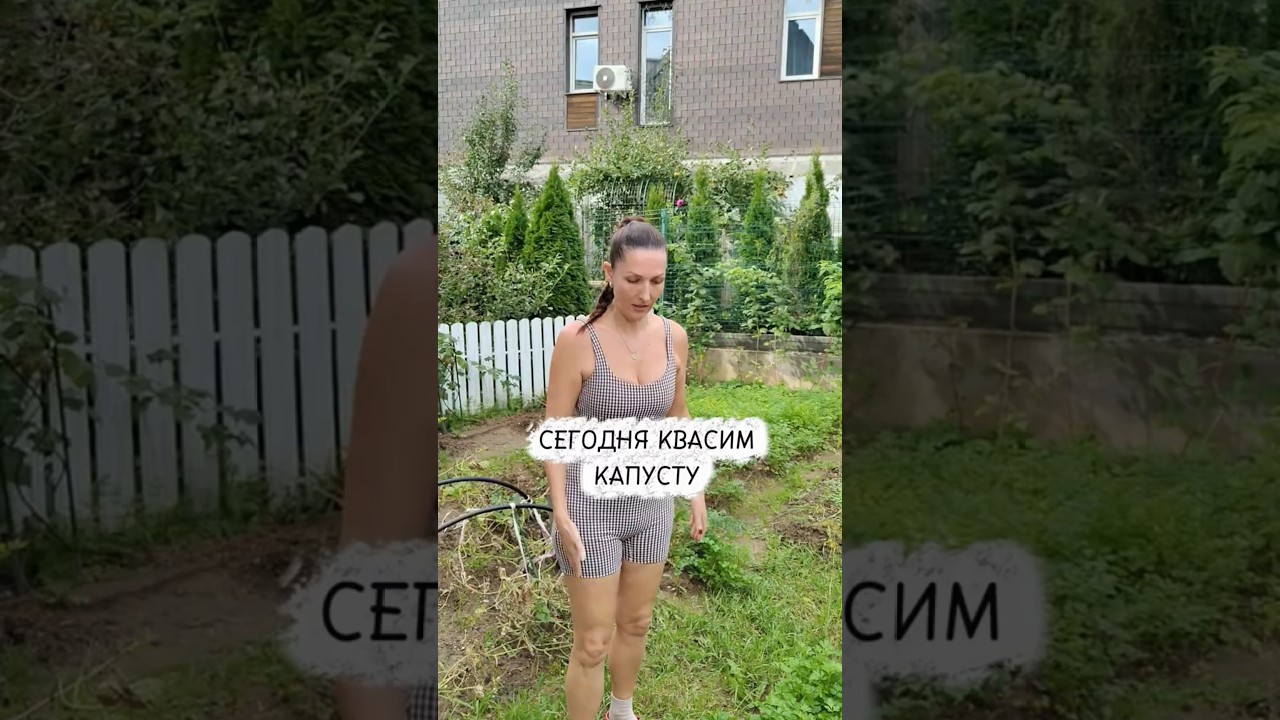
Hi, I’m Mila, and today you’ll find out why sauerkraut starts a day before the ferment: tomorrow I’m fermenting, and today is for gathering the last secret ingredient. I’m heading out to the garden to pull parsley roots: without them, in my words, you can’t ferment cabbage at all, and along the way part of the greens goes into a salad and into green smoothies. Let’s take this experience apart by ingredient: why parsley root belongs in the ferment, how to get it and what’s worth preparing the day before.
The experience from the video: the evening before the ferment
The video is short and has no exact proportions — this is a preparatory stage, a “principle”, not a recipe. What happens in my kitchen:
- tomorrow I’ll be making “super sauerkraut” with my subscribers;
- today I’m going to the garden for parsley roots — a cabbage ferment “without parsley root” doesn’t count for me;
- I need a few roots, so that it’s “just really good”;
- pulling the root out isn’t easy: it “doesn’t just come loose”, and my helper and I have to work at it;
- part of the parsley I pick goes to a salad and to green smoothies;
- and at the end — a question to the audience: “shall we go and ferment some cabbage?”
Why parsley root goes into the ferment
Parsley root is an old grandmother’s ingredient that turns up in village ferments more often than in city recipes. It gives the brine its aroma — soft, green, “straight from the garden” — which enriches the taste of the cabbage without drowning it out. It’s exactly such root additions that make a home ferment different: recipes without parsley root exist too, but for me this ingredient is a required line on the list, and I start the video with getting it.
The second meaning of this video is the economics of taste. Parsley root is almost never sold in shops: people take it where parsley grows on its own — from their own garden or from gardening friends. Along with the root I get a bonus too: fresh greens for a salad and for green smoothies. One bed covers three tasks at once — the ferment, a fresh salad and a morning drink. If you don’t have your own garden, the root really can be asked of gardeners at the market: people selling parsley with the soil on usually don’t cut the root off.
Why this works
Parsley root is a concentrate of the plant’s aromatic compounds: in the underground part they build up more strongly than in the leaves, and they open up slowly, over the whole fermentation period. That’s why the root goes into the ferment whole or cut up: it “serves” the flavor gradually, and by the end of the fermentation the brine has a depth that greens alone don’t give.
Fermentation in general loves such slow ingredients: spices, roots and garlic give up their flavor over weeks, not minutes. Hence a principle worth remembering: everything aromatic that should stay in the finished product goes in at the beginning, not at the end. Fresh parsley greens are an “eat now” ingredient: they live in salads and smoothies, where their vitamins and aroma reach the body without a long wait.
About the green smoothies, to which I put part of the harvest: I have a similar experience with sprouting — how to sprout fenugreek at home, one more way to add fresh greens to your diet from your own little “plantation”.
How to fit it into your life
- Before the ferment, gather the “full list” of ingredients: cabbage, beetroot, carrot, spices and — as I do — parsley root.
- Take the root from your garden or from gardeners: choose plants with a well-developed root, they’re the ones that come out “with a fight”.
- Wash the roots like any root vegetable: soil on them is normal, dirt in the jar is not.
- Don’t throw the leaves away: a salad and a green smoothie are a logical “continuation” of the same bunch.
- Start the ferment in the morning or during the day: for me “nine in the morning is just right”, and by evening you don’t make it in time.
Cautions
- Only edible varieties of root. Make sure the parsley wasn’t treated with chemicals before you put the root in food.
- Wash thoroughly. Soil between the leaves and on the root is a source of extra microflora: brine likes cleanliness.
- Don’t confuse parsley with similar-looking plants. If the garden isn’t yours, take the root only from someone who knows exactly what they planted.
- Add the root gradually. The aroma of parsley root is an acquired taste: ferment the first batch with one root, to find your own measure.
This little video holds a lesson about life more than about cabbage: a good result has a preparation, and it starts the day before, not “along the way”. The body will get enzymes and vitamins tomorrow, and today there’s a walk around the garden, fresh greens and a pleasant anticipation. It’s these small rituals of waiting that make homemade dishes tastier even before the first taste.
Prepare the roots in advance and join the ferment: for me it’s always a whole event. Save the principle for yourself and tell me in the comments what your secret ingredient for sauerkraut is — I read every review )



