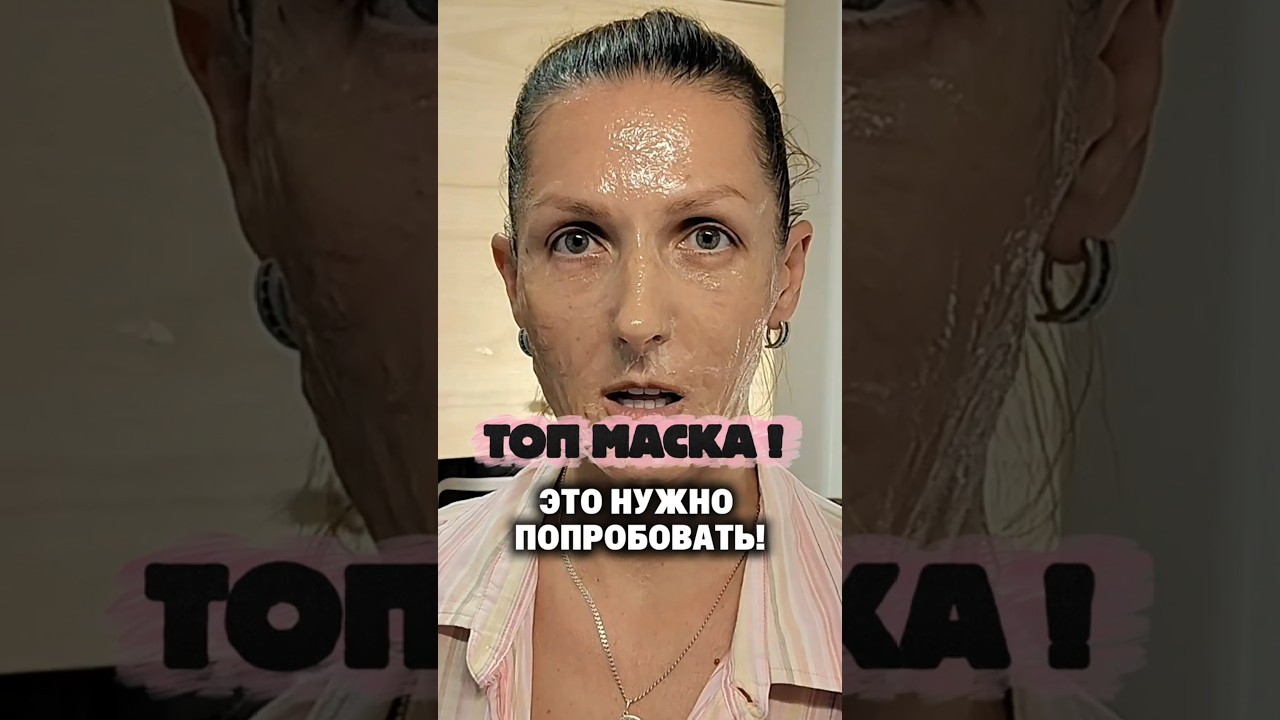
A gelatin mask — the one I say in the video “everyone has probably tried already,” while I only got to it now. Hi, I’m Mila, and today I’ll show you the result of my experiment: skin “soft-soft,” a tightening effect — “it’s just a cosmic mask,” and everything is made in five minutes and costs pennies. Let’s break down the principle of a gelatin mask, why gelatin is called a budget collagen and what to expect from the first procedure — including slight redness, which I talk about honestly.
Experience from the video: the principle of the gelatin mask
There are no exact proportions in the video — I show the principle and my own sensations. The classic way of making a gelatin mask looks like this:
- gelatin is poured with water and left to swell;
- the swollen mass is brought to dissolution and cooled to a warm state;
- the mask is applied to the face in an even layer and sets into a film;
- the film is removed, pulling the skin tight — that very effect I describe as “pulls everything tight.”
“The most important thing is that it’s natural and takes 5 minutes to make,” I note. The sensations after removal: the skin is very soft, still a bit with redness — and this, judging by the video, is a normal part of the process. “The preparation is very simple, it costs pennies,” I sum up.
Why it works
Gelatin is collagen itself
A well-known fact: gelatin is partially hydrolyzed collagen obtained from connective tissue. Hence the reputation of a “budget collagen mask”: store-bought collagen creams cost noticeably more, but they work with the same idea — to support skin firmness from the outside.
The film effect: mechanical lifting
When it sets, gelatin forms a dense film that fixes the skin in a “lifted” position and, when removed, gives a tightening effect — a micromassage of every millimeter. After removal the skin looks smoother and firmer, and fine wrinkles look smoothed out. It’s a temporary but cumulative-in-sensation effect: regularity makes it noticeable.
Gentle renewal
The peel-off film takes with it the surface flakes of dead cells — a light renewal without a scrub. Hence the “soft-soft” skin I talk about in the video.
Redness is part of the process
“Right now it’s still a little bit with redness,” I honestly show right after the procedure. Removing the film is a physical action, and temporary redness is a natural reaction that goes away on its own in a short time.
How to build it into your life
- Soak the gelatin in advance, let it swell properly — rushing here ruins the consistency.
- Dissolve the mass until fully transparent and be sure to cool it: warm, but not hot, so as not to burn your face.
- Apply to cleansed skin, avoiding the eye area, eyebrows and hairline.
- Wait for the film to set completely and remove it from bottom to top in one movement, then wash your face.
- After the procedure apply a moisturizing cream; film masks are usually done no more than once a week.
Cautions
- Don’t apply it to eyebrows and hair. Set gelatin holds tightly — removing it from hair will be painful.
- Allergy test. Even natural components cause reactions: a drop of the ready mass on the inner elbow, half an hour of waiting.
- Active inflammations and rosacea — not your format: mechanical tightening irritates already capricious skin.
- Dry skin — mandatory cream afterward, otherwise there will be a feeling of tightness all day.
- Don’t remove the film sharply against the direction of fine hair — move smoothly and in the direction that’s comfortable for your skin, down-up, not in jerks.
And the usual reminder instead of advertising: lifting is not only about a mask. Facial tone rests on water, sleep and general condition, and home procedures only emphasize what’s inside. That’s why a gelatin mask fits well into an evening ritual — like the one I broke down in the article skin care after 40: an evening ritual: a mask, cream, early bedtime.
To continue the collagen topic, look at the collagen mask for the neck — the neck ages earlier than the face and deserves the same attention. Try it and share in the comments: did your skin give a “cosmic” effect or did it require getting used to? I read every comment.