


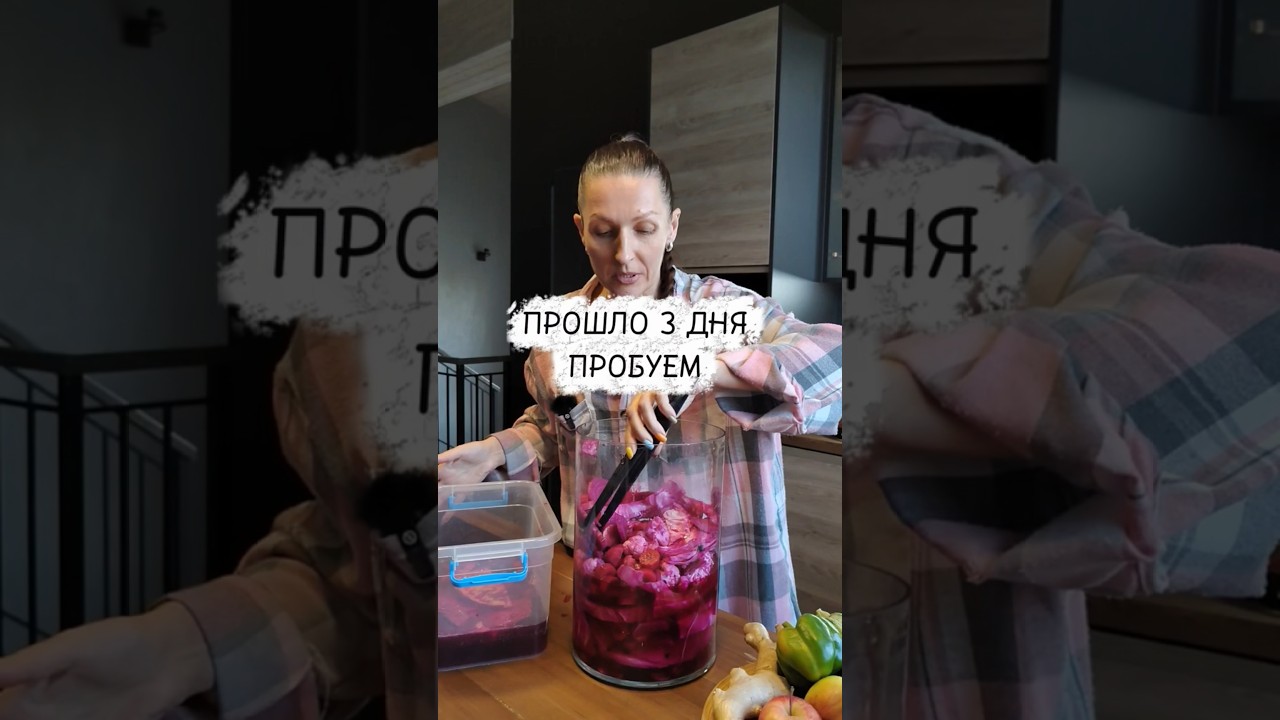
Hi, Mila here, and today I’ll talk about the most practical question of the ferment. Three days of fermentation — and my pink cabbage is already ready for the first tasting: I open the bowl, try the cauliflower and the beetroot and show how to move the harvest so that everything fits in the fridge. In this video — the answer to when fermented cabbage is ready, how long it keeps and what to keep it in. Let’s break my experience down.
The experience: day three — the first tasting
There are no exact proportions in this video — it’s a log of the ongoing story with the pink cabbage, the recipe for which I showed earlier. Here what matters is timing, signs of readiness and storage rules:
- after 3 days the cauliflower is already ready to eat — I do the first tasting straight from the bowl;
- signs of readiness: the cabbage is crunchy, you can feel “that special tasty tang”;
- the beetroot is ready too — we try it together with the cabbage;
- the general rule from the video: “3-4 days and your cabbage is ready”;
- but the finished product needs to be kept in the fridge, not in the bowl on the table;
- in the fridge fermented cabbage calmly stands for 1-2 months — although, I admit, they’ll eat it sooner.
How to store it: my tips from the video
I ran into a household problem familiar to everyone who has fermented in a big vessel: a gorgeous bowl doesn’t fit in the fridge. The solution came instantly — an old school container. I move the whole ferment into a plastic container with a lid, and it fits entirely on the shelf. The whole ferment from the bowl turned into “a whole basin” of ready product, which is now stored compactly.
Three practical rules follow from this. First: the storage container must have a tight lid — the smell of a fermented product shouldn’t permeate the whole fridge. Second: it’s better to move it in portions — open, take a spoonful, close and put back on the shelf. Third: the calm storage time is 1-2 months, but the real life of the jar is always shorter if the dish really pleases the family.
Why it works
Fermentation is a living process: lactic acid bacteria convert the sugars of the vegetables into lactic acid, and the longer the vessel stands in the warmth, the sourer the product becomes. That’s exactly why the timing from the video is logical: 3-4 days in the warmth is enough for the cabbage to pick up sourness and tang, and after that the warmth starts working “toward over-souring.”
Cold plays the role of a brake: in the fridge fermentation slows almost to zero, the taste is fixed, and the product keeps its freshness for weeks and months. This is the classic principle of all fermented products — first ripen in the warmth, then “fall asleep” in the cold. Hence the crunch: in an acidic environment and in the cold the cabbage keeps its firm texture, which is what people love it for.
Cauliflower in this scheme is a fast crop: it’s softer than white cabbage, picks up flavor faster, which is why I taste it already on the third day. Beetroot in the pair gives not only the color of the brine but its own sweetness — and it’s also edible at the first tasting. More about the benefits of raw beetroot in the diet — in the article vitamin salad of raw beetroot.
How to fit it into life
- Write the date you started the ferment right on the lid — without a note, by the third day there are always doubts.
- Taste it every day from the third day: sourness and crunch are the signal that it’s time for the cold.
- Prepare a container with a lid in advance: let it wait in the fridge empty.
- Move it with the brine — without it the cabbage dries out and loses its color.
- Adopt the rule “a spoon onto the plate every day”: the product lives 1-2 months precisely with regular use.
Warnings
- Don’t overdo it in the warmth. A missed fermentation day easily turns “a tasty tang” into an over-salted sourness.
- Saltiness and pressure. Fermented products contain a noticeable amount of salt: if you’re prone to swelling and high pressure, portions should be moderate; more about eating with hypertension in the mini-guide on pressure without pills.
- A clean spoon. Take the cabbage only with a clean spoon — forks and fingers don’t go into the jar.
- A strange smell and a film. A sharp, inedible smell or slime is a signal to throw out the whole portion, not to “rinse it.”
Behind the household story with the bowl and the container there’s something more important: the ferment teaches you to work with timing without anxiety. The product itself says when it’s ready — you just have to taste on time and not rush it. The body gets live enzymes and the vitamins of the winter months, and the mood gets the calm confidence of a person who knows how to wait for the right moment.
Ferment by my instructions and tell in the comments on which day your family “ate” the whole jar — let’s compare records )



