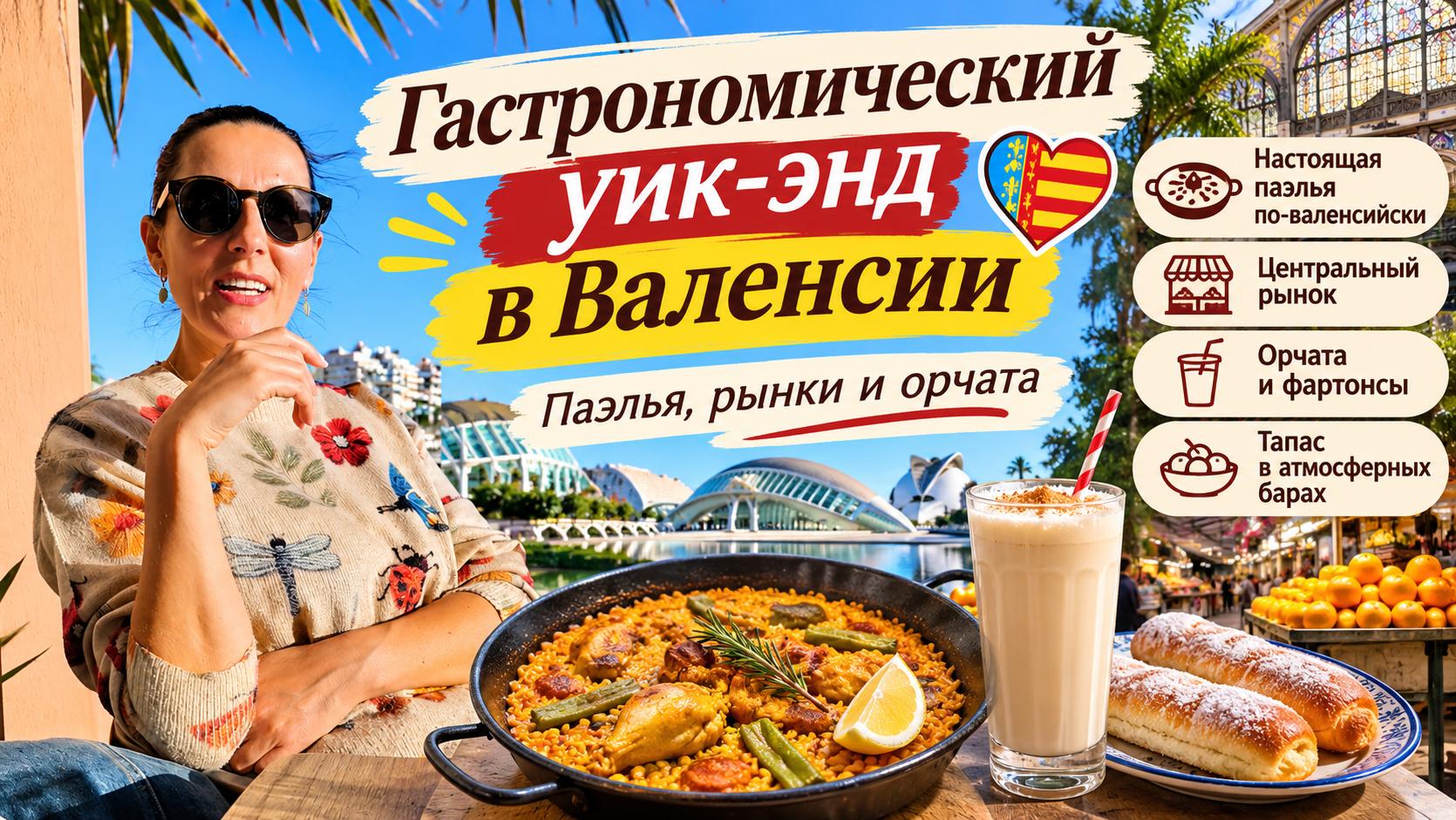
Valencia is a city where food has an exact address and an exact time: paella — for lunch, horchata — at midday, the market — in the morning. Hi, I’m Mila, and today I’ll tell you how to put together a gourmet weekend in Valencia so that you taste all the main things and don’t run around in a panic between neighborhoods. The route is simple, tested and appetizing — designed for two days without a car and without stress )
Day one: the market and the old town
Start at the central market — it’s a food attraction in itself: display cases with ham, cheeses, olives and fresh fish that you want to press your nose up to. Buy fruit and local bread, have breakfast nearby and head out to wander the old town: the cathedral, narrow streets, squares with cafés and bell towers you can see from everywhere. In the evening — tapas: small plates, different flavors, one table for the whole group. I advise not to order everything at once: go from bar to bar — that way the evening stretches out and becomes more interesting. And between breakfast and dinner leave time for the Turia Gardens: the former riverbed was turned into a green ribbon through the whole city, and a walk along it is a pleasant way to “walk off” lunch.
Day two: paella by the city’s rules
Real Valencian paella is made with chicken, rabbit and green beans — without seafood, to the surprise of many tourists. It’s served for lunch, the dish comes as one portion for two, and almost no one would order it in the evening at a decent restaurant. Look for a neighborhood of family restaurants, not the first line by the cathedral: there they’ll cook the pan with the crispy crust underneath — socarrat, which is considered a delicacy here — with pride, not as part of a stream. A sign of an honest place: a special “paella valenciana” sign and lunch tables reserved by local families. If you want a seafood version — it’s called “marisco” and it’s good too, just don’t mix these two worlds together.
Horchata and sweets
Midday in Valencia is the time for horchata: a cool drink made from tiger nuts, sweetish and refreshing in the heat. It comes with fartons — soft, elongated buns that you dip right into the glass. And for coffee, take turrón — the almond nougat that here is loved all year round, not only on holidays. My personal order of the day is this: morning — the market and coffee, lunch — paella, midday — horchata with a fartón in the shade, evening — tapas and a stroll. Between these points a lookout terrace and one of the many museums happily fit in — Valencia has a quiet charm that unfolds without haste.
My practical notes
- eat where there’s a line of locals: a more reliable indicator than any ratings;
- don’t chase “seafood paella” in tourist quarters — deeper into the city it’s more honest and tastier;
- the market works in the morning, by midday the stalls empty out — come earlier;
- on a Saturday evening the old town hums — book a table in advance;
- leave room for dessert: local sweets are part of the route, not a souvenir in your bag;
- try horchata in different places: the taste varies noticeably, and each “own” bar has its fans.
Food as a way to understand the city
Valencia showed me how a whole culture gathers around one table: shared plates, long lunches, conversations across the pan. About this I have a separate article — about why in Spain food is a shared table and what the “basin for everyone” is. And if you, like me, love morning rituals, take a look at the piece about ham for breakfast: the fresh slicing there is a whole performance. And a small final tip: don’t set the goal to “cover everything” — choose three main pleasures and give them your time and mood.
And what did you try in Valencia — and what stuck with you most? Tell me in the comments: let’s put together a people’s version of the route and add flavor discoveries to it.