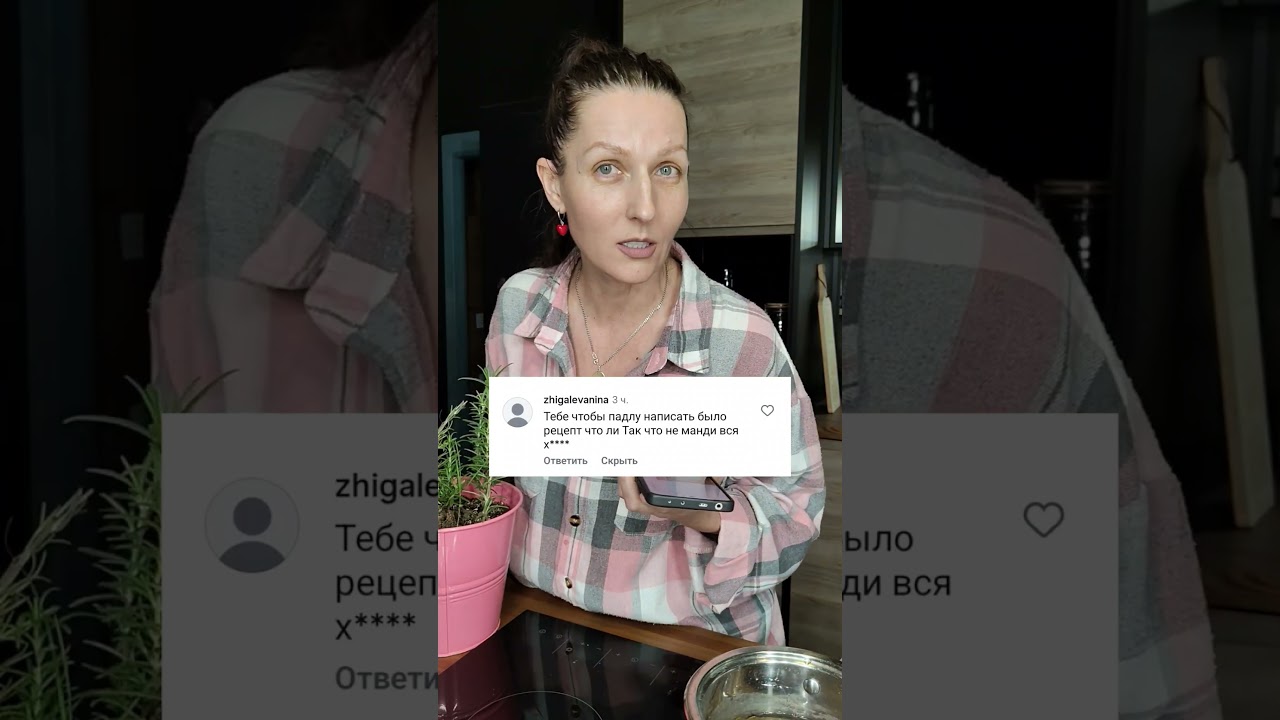
Hi, I’m Mila, and today I want to tell you about one rude comment and my answer to it — a little lesson for anyone who shares something publicly. “Was it really too much trouble for you to write out the recipe?” someone wrote under a video where I shared my hair growth elixir. My reply came without excuses, without self-pity, with a clear line drawn. The video is short, but inside it there’s a ready-made script for behavior that saves the nerves of anyone who has ever put their creativity or experience on display. Let’s break down what works in that answer and why hate is almost never about you.
What happened: the situation without rose-colored glasses
The context: I was talking about a homemade lotion for hair loss that genuinely works for me — hair has started growing back where there were bald patches. Then a sharp comment appeared saying I “should have” written out the recipe (by the way, I did post the recipe later as a separate video — rosemary hair growth elixir). My answer stands on three pillars:
- I don’t owe anyone anything. “I’m just sharing from the bottom of my heart, telling you what works for me.” Sharing is a gift, not an obligation.
- My experience is valid on its own. “Hair actually started growing here” — the facts of my life don’t need anyone’s approval.
- A boundary instead of a war. “Then you’d end up banned” — the conflict isn’t escalated; the offender is simply removed.
Why hate stings so much: the mechanics
A rude comment doesn’t hit your content — it hits your self-worth: “I’ve been rejected, I’m not good enough.” That’s exactly why it works even on experienced authors. The psychology of hate is simpler than it seems: a person who writes bile to strangers is broadcasting their own state — irritation, envy, a need for power. The “I should have written the recipe” comment is about the desire to control someone else’s labor for free, not about the quality of the video.
A useful test for any negative response: ask yourself “are there facts here I can use?” If there’s constructive feedback (“the mask gave me irritation”) — that’s feedback, and it’s worth thanking them for it. If it’s only an assessment of your personality — that’s noise, and the answer to noise is silence or a ban.
The algorithm for answering hate: four steps
- Pause. Don’t reply in the first few minutes — adrenaline writes the worst texts.
- Check for something constructive. Keep the facts, ignore the insults.
- If you do answer — keep it short and without excuses. My model: “I’m sharing from the heart. I don’t owe you anything.” One thought, no counter-attack on the person.
- A ban is normal. Removing an offender isn’t weakness, it’s keeping your space clean: guests who break the dishes don’t get invited again.
Where the real work is: inside
Your reaction to hate is a mirror of your inner self-esteem. While self-worth rests on outside opinions, any comment controls your mood. This is exactly the territory my site specializes in: look at the self-worth technique — it’s directly about returning support to the inside — and the post about fear and action — about why the fear of judgment stops people from being public.
For deeper work there’s also a mini-guide on working with the Shadow: the rudeness we see in others often resonates with the parts of ourselves we haven’t accepted — and the mechanism becomes easier once you see it as a whole.
Separately: for those who are just starting to share
I say something important in the video: “And the girls thank me — the ones it helped.” This isn’t a small thing — it’s about balance of attention. One hater collects all your disappointments only if you let them be your only viewer. Ten grateful messages are also a fact. Keep them separately: screenshots of thank-yous in a folder — your antidote for the day when hate feels like “the whole audience.”
And if hate finds you in the back office of life — at work, in the family — the same algorithm works: pause, facts, boundaries, and leaning on yourself. Health and firm boundaries to you. Tell me in the comments how you answer rudeness — I read every review.