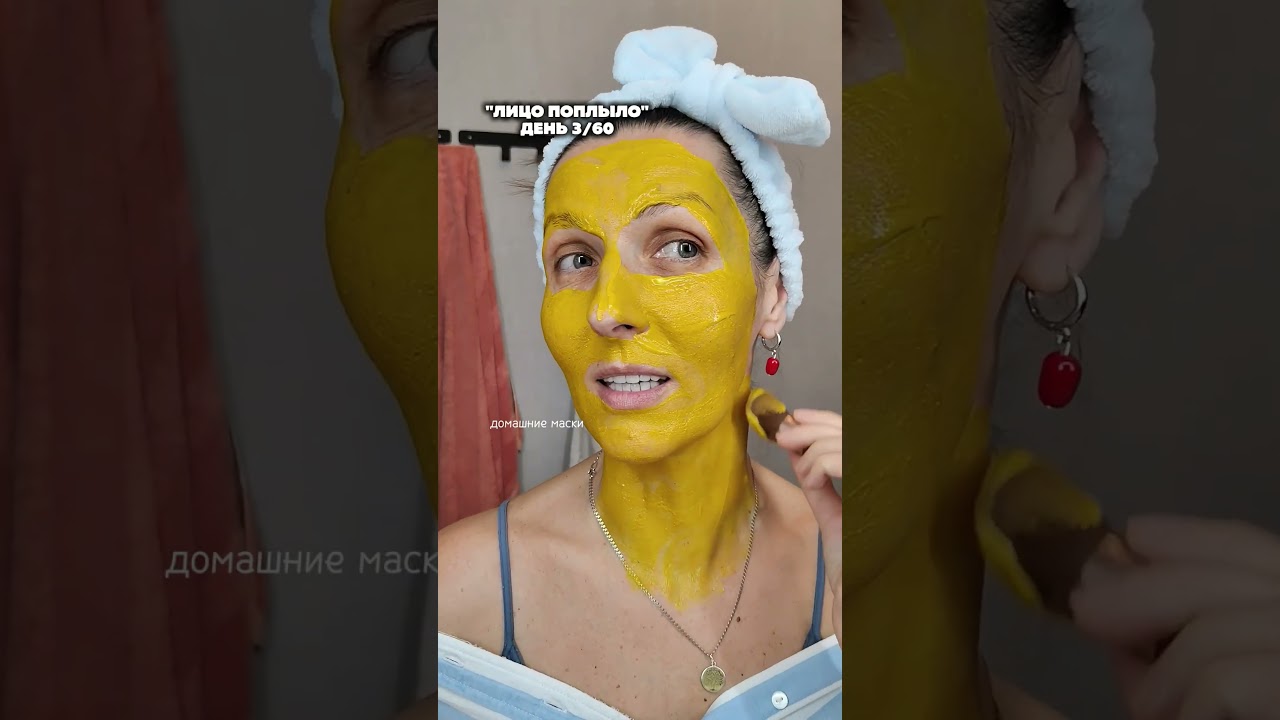
Hi, I’m Mila, and today I’ll tell you about a mask I love to talk about: “it costs pennies, and the effect is better than a visit to the cosmetologist.” A turmeric face mask is exactly that: three ingredients you’ll find in almost any kitchen, twenty minutes of your time — and skin after forty answers with brighter pigmentation, hydration and a fresh complexion. Let’s break down the recipe from the video, why every component works and how not to repeat the typical beginner’s mistake — yellow stains on the pillowcase and your favorite blouse.
The turmeric mask recipe: exact proportions from the video
I use this mix regularly and I’m sharing it for the first time — the video has gathered more than 160 thousand views. The proportions are simple:
- turmeric — 1 teaspoon;
- glycerin — 1 teaspoon;
- sour cream — 1 heaping teaspoon;
- a little water to bring the mixture to a smooth consistency.
Mix everything and apply to the face in a thin layer, without skipping the neck and the décolleté area — I’ll remind you separately: the neck ages before the face, and it’s the neck that gives away your age. Leave it on for 20 minutes, rinse with warm water. Repeat twice a week.
Why every component works
The recipe looks random, but in fact everything in it is logical — it’s three different care mechanisms collected in one cup.
Turmeric: brightening and antioxidant support
Curcumin — that very yellow pigment of the turmeric root — is actively studied as an antioxidant and anti-inflammatory compound. In homemade cosmetics turmeric is traditionally used to brighten pigment spots and even out the tone: it gently affects the activity of melanocytes, the cells that produce melanin. That’s why after a course of masks the spots “will get a little smaller” — that’s what I promise in the video, and that’s how it really works: the brightening is gradual, not all at once.
Glycerin: moisture drawn from the air
Glycerin is a classic humectant: it draws water from the surrounding environment and holds it in the upper layers of the skin. One of the cheapest moisturizing ingredients in cosmetic chemistry, and it works. Paired with sour cream it gives a feeling of “nourished” without a film on top.
Sour cream: lactic acid and lipids
Sour cream in the mask works double. First, lipids — skin after forty loses its own fat faster, and the animal fat from dairy softens the feeling of tightness. Second, fermented dairy products contain lactic acid — a mild natural exfoliant that in 20 minutes slightly “polishes” the top layer of dead cells. Hence the effect of “the face looks fresher,” which is impossible to get from hydration alone.
How to apply the mask properly: step by step
- Wash your face with warm water — the skin should be clean and slightly steamed.
- Mix the ingredients right before applying: the mixture doesn’t keep.
- Apply a thin layer with a brush or your fingers, including the neck and the décolleté.
- 20 minutes — rest. This is a good time to do some light stretching or just lie down.
- Rinse with warm water, pat with a towel, apply your usual cream.
Important cautions
- A test on the inner elbow. Turmeric causes irritation in some people, and spices in general lead the list of food allergies. Put a drop of the mixture on the skin and wait 30 minutes.
- A yellow tint on fair skin is a normal phenomenon, usually gone by morning. More about why the face turns yellow and what to do — in the article why the face turns yellow from turmeric.
- Don’t combine it with active peeling. On the same day don’t do the mask and acid or retinol scrubs — the turmeric mask is active enough on its own.
- Open cuts and active breakouts — a reason to postpone the procedure.
Homemade masks or a cosmetologist: an honest comparison
In the video I compare: “I went to the cosmetologist — paid 10 thousand. And here, homemade masks — you’ll always be fresh and well-groomed.” The honest answer is in the middle: a homemade mask is systematic care between visits, support for tone and hydration. It won’t replace hardware procedures if the task is to remove deep creases. But for the regular state of “fresh, hydrated, even tone,” a course of two masks a week works through consistency: skin lives in a rhythm, not in a one-off jolt every six months.
By the way, about consistency: until New Year I’m running a personal challenge of daily self-care and showing that you don’t necessarily need expensive jars in your arsenal — three working products are enough. Read about my evening ritual at 46 in the article skin care after 40: an evening ritual with petroleum jelly.
What else is worth knowing about turmeric in cosmetics
Turmeric has been used in masks for centuries — brides in India still go through the haldi ritual with turmeric pastes before their wedding. Modern cosmetology came to curcumin later: now you can find it in anti-pigmentation serums. A homemade mask is the most accessible way to get to know this ingredient; the main thing is to keep the measure: brightening masks are not done more often than twice a week.
Save the recipe, share it with your girlfriends and tell me in the comments how your skin reacted after the first application — I read every reply. And if you have your own tried turmeric recipe, I’m waiting for it in the comments with special interest )