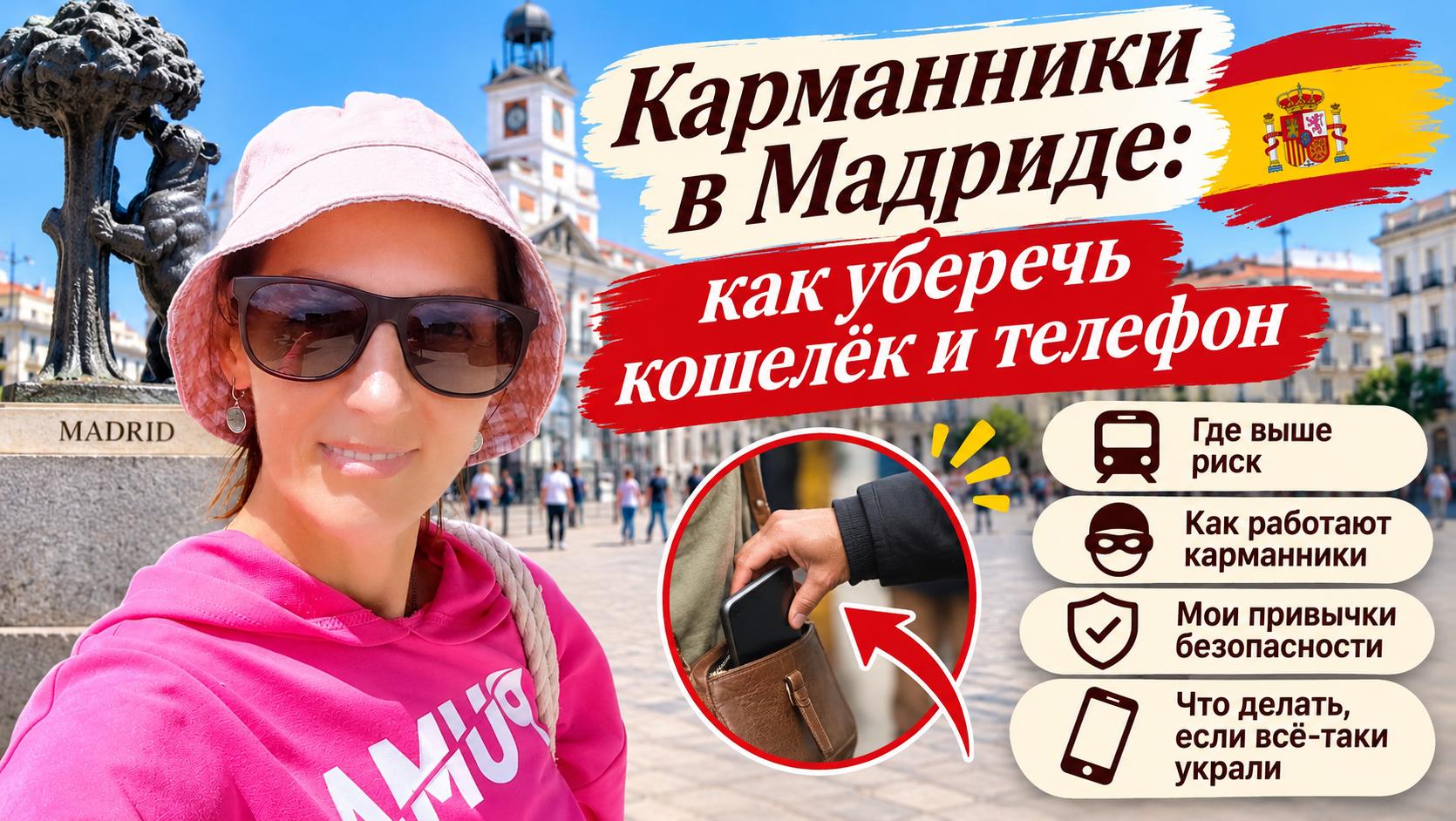
Madrid is a city where it’s easy to relax: wide squares, evening walks, warm light. And it is exactly in that relaxed state that the people who live off other people’s phones and wallets make their money. Hi, it’s Mila again, and today you’ll learn how pickpocketing works in the Spanish capital and which habits close almost all the risks — from the metro to the terraces of cafes.
Where the risks are highest
- the metro line from the airport and the railway stations — a suitcase, tiredness, eyes on the navigator: a classic combination;
- Sol, Gran Vía and the viewpoints — dense crowds where a bump goes unnoticed;
- cafe terraces — a phone on the table lives about three minutes on average;
- museums and the queues to them — cramped space, a backpack on the back, many people with their hands busy with a map and tickets.
How the hands work
A pickpocket theft is almost always a performance with parts assigned. One person “asks for directions,” a second bumps into you or spills something on your jacket, and a third is already taking it out. Sometimes they offer to “help” with a suitcase at the escalator or ask you to hold flyers — while your pocket is being studied. My simple conclusion from watching: any unplanned physical closeness is a signal to put your hand on your bag. You don’t need to fear everyone you meet — you just need to know this language of gestures and not pay for the ignorance.
My habits in Madrid
- documents and a second card stay at the hotel, with me — the bare minimum;
- phone in a front pocket with a zipper or in the inner compartment of the bag, never in a back pocket;
- the bag only across the body and in front of me, in the metro — on my chest;
- on a terrace I put the phone away at the first pause, not “while the coffee is still hot”;
- copies of documents — in the cloud, cash — in two different places;
- in a crowd I move the backpack to my stomach, even if it looks “not very touristy.”
If a theft happens anyway
First — breathe out: things aren’t worth nerves, and safety matters more than a bag. Emergency services are 112, a single number for the whole country. For a theft report in English in Madrid there is a separate police report phone line — 902 102 112; it takes calls on weekdays from nine in the morning to nine in the evening; the usual phone intake of reports was closed long ago, so check the current options before your trip. Then — block the cards, change passwords and, if the phone is gone, log out of banking apps from another device. By the way, I have a separate article about the country’s emergency alert system — about the emergency alert in Spain: it explains why a phone sometimes “howls” and how it all works.
If you’re not a guest but live in Spain, your risks are different — home and its safety. About the other side of “calm life” I have a piece on protecting your home from squatters — it will be useful for anyone leaving for a long vacation.
Instead of anxiety — a system
Madrid is not more dangerous than other big capitals: it just requires the same city habits. Put together your own small ritual — where the phone is, where the card is, where the copies are — and then the city will become what it should be: the Royal Palace, Retiro Park and the evening light )
And which safety measures are a must for you on trips? Write in the comments — we’ll build a common list and add someone else’s experience to it, so we don’t have to bump our own heads.