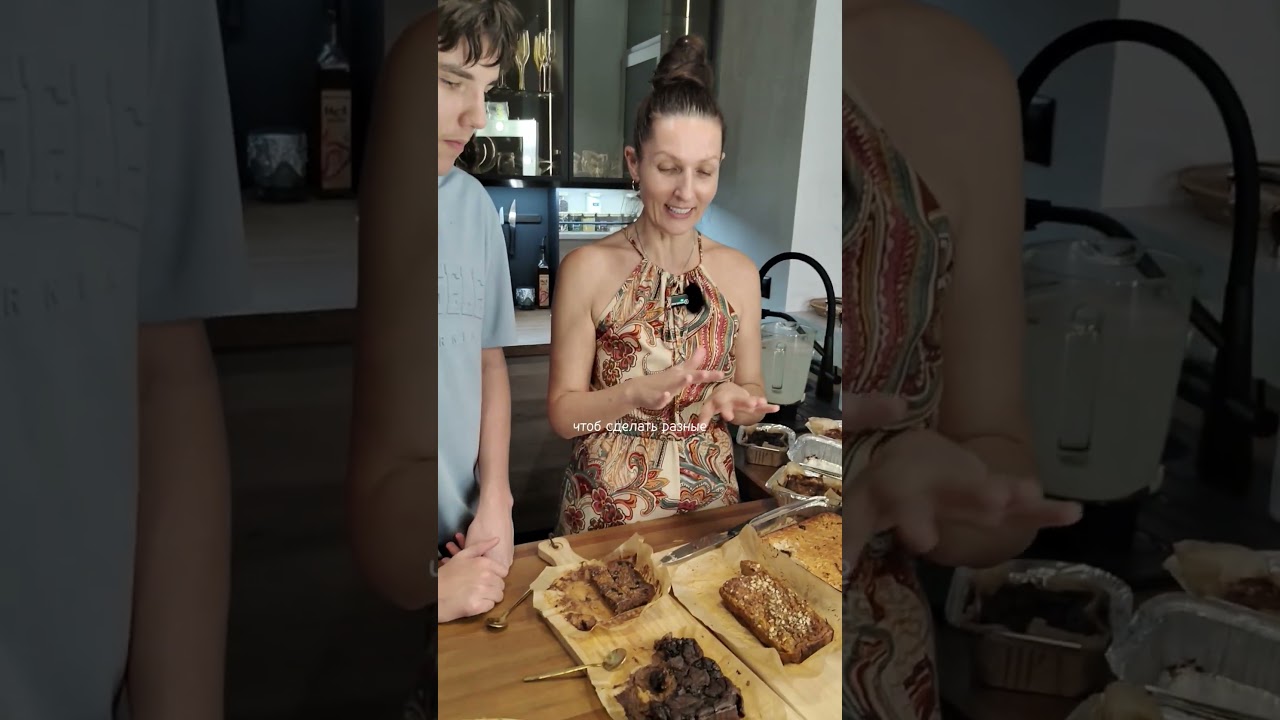
My family experiment worked: several kinds of homemade baking, the kids as tasters, nobody knows the ingredients — and everyone guesses. Hi, I’m Mila, and today I’ll share my go-to recipe for carrot cake with walnuts and a cottage cheese charlotte — and explain why the “feed the picky eaters a game” format works better than any amount of coaxing.
What Happened in My Kitchen
In our family it’s a classic situation: some don’t like pumpkin, others — zucchini. I baked several variations and set up a blind tasting: the kids tried, guessed the ingredients and voted. The result was funny and very telling: the one who “doesn’t like pumpkin” chose exactly the pumpkin one; the zucchini one was called “too neutral”; the carrot cake with nuts was a hit, and the classic charlotte stayed a classic. The task “feed everyone” got solved without a single round of coaxing — through play and curiosity. I admitted afterwards that I’d never made so many muffins at once — and I didn’t regret it.
Carrot Cake with Walnuts: My Recipe
- 3 fresh carrots, grated;
- flour — 2 tbsp;
- sugar — 3 tbsp;
- eggs — 2;
- walnuts — 60–70 g, finely chopped;
- lemon zest to taste;
- baking powder.
I mix all the ingredients, pour the batter into the pan and bake at 180 °C for 35–40 minutes. By my calculations: about 190 kcal, protein 5 g, fat 12 g, carbs 16 g per 100 g.
Charlotte with Cottage Cheese: My Recipe
- 3 green apples, grated;
- cottage cheese — 1 pack (180 g);
- eggs — 2;
- flour — 3 tbsp;
- sugar — 2 tbsp;
- baking powder and cinnamon to taste.
I mix everything, pour it into the pan and bake at 180 °C for 35–40 minutes, checking doneness with a wooden skewer. Per 100 g — about 107 kcal, protein 6 g, fat 3 g, carbs 15 g. The cottage cheese in the charlotte is my secret trick: with it the baking turns out very tender.
Separately, I’d like to note the ingredient lists. Cottage cheese barely changes the taste of the charlotte, but it makes the texture softer and adds protein. Lemon zest in the carrot cake works just as delicately: the aroma appears, and no extra sugar is needed. These are the little things that separate “just baking” from baking people remember.
Why My Experiment Hooks People
The psychology here is simple and kind. First, the label “you don’t like pumpkin” is stronger than taste: remove it — and the person tries without inner defenses. Second, the “guess the ingredient” format turns food into a game rather than a battlefield over healthy eating. Third, voting gives kids a voice: their opinion is heard, and agreeing to something new stops being scary. Adults know this too: we’re more willing to try the unfamiliar when nobody is forcing us.
How to Repeat It at Home
- Bake two or three variations of the same base — that way the comparison is honest.
- Don’t announce the ingredients before the tasting.
- Let everyone guess the ingredients — you’ll get your laughs.
- Hold a vote for the favorite of the evening.
- Afterwards, honestly explain what was inside and note: “and it turned out you liked it.”
- Repeat once a month with different fillings — this kind of tradition brings the family together faster than a TV series.
Precautions
- Walnuts are a strong allergen: check for restrictions before a group of kids.
- Cinnamon in large amounts doesn’t suit everyone — add it to taste, and go easy for little ones.
- Cottage cheese and eggs need to be baked through properly — trust the wooden skewer, not the timer.
- Don’t turn the game into pressure: if someone refuses to try, it’s not a big deal.
- Grate the zest right before the batter — its aroma fades fast.
Kitchen games like this are not only about food. They’re a way to get back the lightness and curiosity that an adult schedule usually eats first. There’s a good piece about working with your inner child — try reading it after a family baking session.
And pay attention to the voting results: the favorites were the simplest options — the carrot cake with nuts and the classic charlotte. Simple recipes are usually the ones that stay in the family repertoire for years.
Save both recipes for yourself — and tell me in the comments which ingredients turned out to be the most unexpected for your tasters. I read every comment and collect ideas for the next blind tasting.