


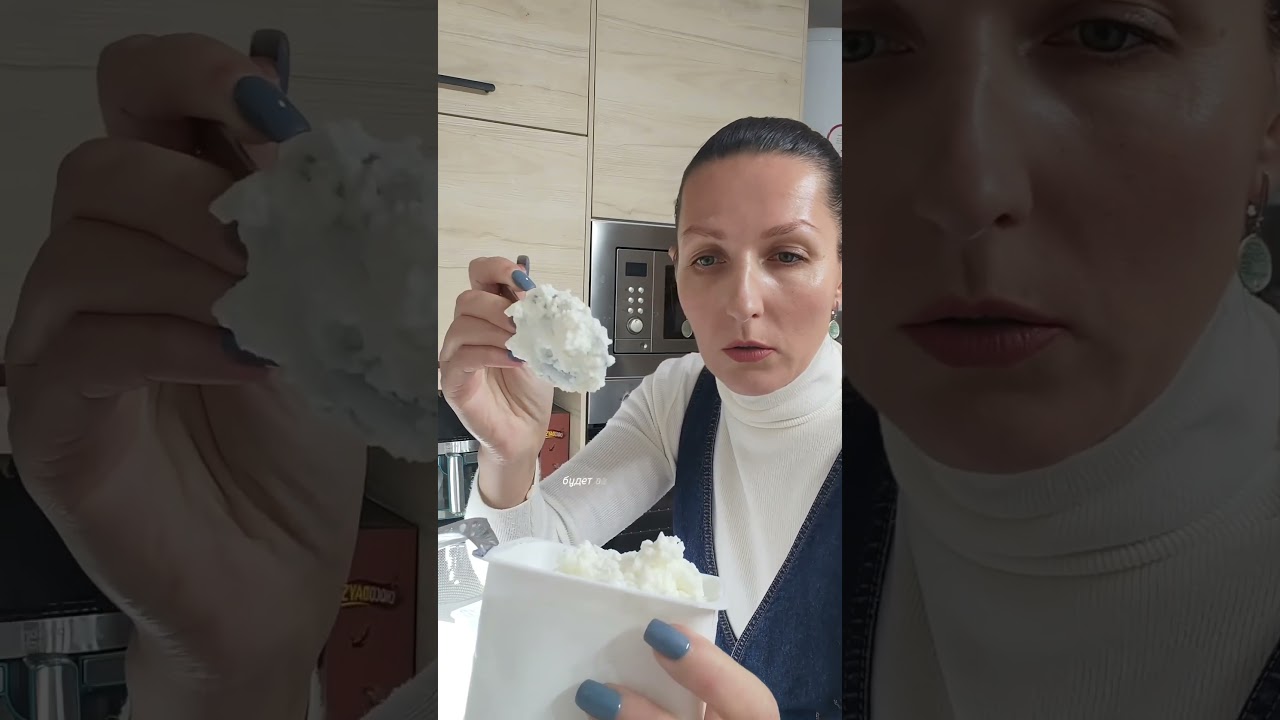
“Runny slop,” “curd mass,” “a pasty liquid” — that’s what people called the cottage cheese from that one purchase in the comments under my latest review. Hi, I’m Mila, and today I’ll tell you how I answer such bright labels with deeds: I make syrniki — little cottage cheese pancakes — out of that cottage cheese, and they don’t fall apart — the tastiest and most tender ones. The main hero of the texture rescue is chia: twenty minutes of soaking, and the “slop” turns into a normal working base. Let’s break down by composition how this trick works, why the syrniki don’t collapse in the pan, and what to do with cottage cheese that’s “a bit sour.”
My experience: the chia principle
The key trick looks like this:
- chia goes into the cottage cheese — “quite a lot”;
- the mixture rests for about 20 minutes;
- in that time the chia absorbs the extra moisture — and the cottage cheese stops being “slop”;
- then — ordinary shaping of the syrniki.
The task isn’t to “dry out” the cottage cheese completely, but to bring it to a working consistency: I always stress that the cottage cheese stays moist, and that’s normal. Along with it into the dough go a sweetener — we’ve already given up sugar — and a little starch, which holds the shape. I make the finished syrniki with cherries; from the same base a baked pudding comes out too — since I got carried away buying this cottage cheese, today the baked pudding is happening as well.
Why it works
Chia seeds are a well-known “sponge ingredient” of home cooking: on contact with liquid they form a gel and absorb several times their own weight in water. This property has long been used in baking, puddings and thickeners. That’s exactly why twenty minutes of soaking is enough for the extra whey in the cottage cheese to bind and the mass to start sticking together. Here the starch works as a second safety layer: when heated it gelatinizes and keeps the syrniki from spreading across the pan.
The second instructive point is about taste. I describe the product honestly: not dry, without fat, a little sour — that’s how it’s supposed to be. My recipe is an example of the “work with what you have” attitude: a little sour — add a bit of sugar, love berries — put in cherries. And the final line with self-irony: if you don’t want to — please, don’t buy it and don’t make it )
How to fit it into your life
- Don’t throw out “imperfect” cottage cheese: chia rescues even very moist.
- Let the mixture stand the full twenty minutes — time here is the main ingredient.
- If you want it sugar-free, use a sweetener like I do, or a sweet berry in the filling.
- Add the starch a little at a time: its job is shape, not taste.
- Make the baked pudding from the same mass: one purchase — two dishes.
Precautions
- Shelf life comes first. Cottage cheese is a perishable product: if the smell and taste are doubtful, chia won’t save it.
- Sourness isn’t spoilage. A light tang in fat-free cottage cheese is normal, but bitterness is not.
- Chia keeps swelling. Don’t cook “for the week”: as it stands, the mass will get denser than you need.
- Individual tolerance. Chia and dairy are not a pair for everyone; with lactose intolerance, change the base.
Behind this little cooking video there’s a big theme — how we react to other people’s labels. A product got “labeled” — and it’s as if it can be thrown out. I answer with a simple action: I showed that excellent syrniki come out of questionable cottage cheese. If the theme of other people’s judgments is familiar to you, read my article on how to react to Kate, and for a seed-based snack take my recipe for a magnesium blend of seeds.
Have you tried “rescuing” cottage cheese with chia? Tell me in the comments what turned out — I read every comment. And save the recipe for yourself so it’s on hand the next time you get a too-moist cottage cheese )



