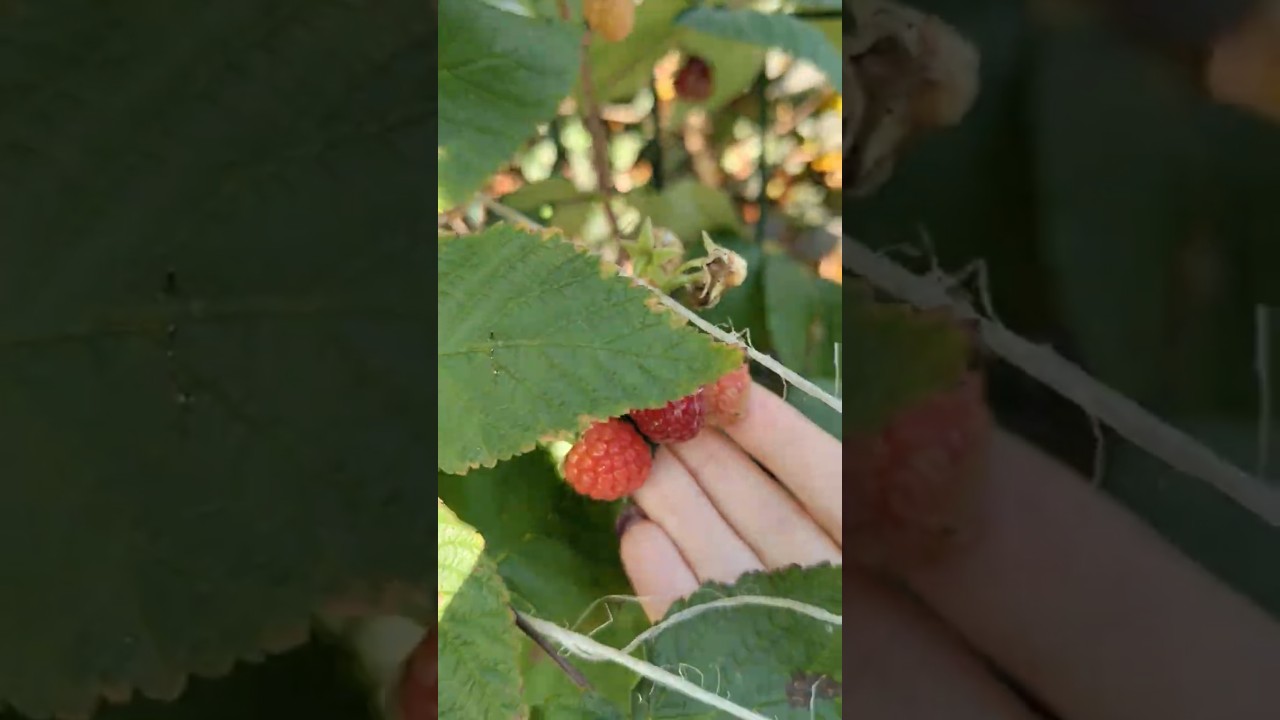
Hi, it’s Mila again, and today you’ll find out how a few raspberry bushes can throw a party in the middle of autumn. “It’s the 26th of September, and I’m in shock again: it’s raspberries again” — that’s me walking out onto the plot and discovering that the everbearing raspberries have ripened once more: yellow and red, bright bushes right at the very end of September. Next to them, strawberries are ripening “already the size of garden strawberries”. I summed up that morning in the title of my video: “I’m as happy as a child. It turns out you need so little to be happy”. Let’s break it down: what happened in the garden, why moments like this stick with us, and how to train the ability to enjoy the little things — with or without pastries.
The situation: raspberries out of season
The event in the video is simple: the everbearing raspberries — yellow and red — are once again covered with berries by the end of September. I’m genuinely amazed: “What is this? Can you understand this — berries like this at the end of September?” Next to them, large strawberries are ripening, enough to fill “a little bowl”. Then comes the practical part: “I’ve got some dough lying around, so today we’re making the most delicious pastries from these raspberries, fresh and tasty”.
Notice the sequence: first — surprise, then — picking the berries, then — baking. There’s no plan to “stock up on the harvest” in this video; there’s pure joy in the moment, which immediately turns into a treat. The weather plays along: “we’ve got sunshine today”.
Why it works: the psychology of small joys
A video about raspberries is really a video about attention. Everbearing raspberries fruit exactly when the garden as a whole is already winding down — and that contrast makes their appearance feel festive. But the celebration only happens for someone who stepped outside and looked: joy in this story happened not because “you need so little to be happy”, but because I noticed. Psychologists call the ability to notice and hold attention on a pleasant moment savoring — and it’s trained like everything else, through simple repetition.
The second important layer is “happy as a child”. Childlike joy at unexpected little things doesn’t disappear in adults — it falls asleep under to-do lists. Little garden surprises — late berries, big strawberries, dough lying around — are ready-made “switches” for inner lightness: they don’t require money or plans, only the willingness to be surprised.
What to do: how to add more moments like this
- Step “outside” in any form: a balcony plant, a window facing the yard, a walk without headphones — you need sources of little surprises every day.
- Hold the moment for a minute: say out loud what surprised you — that’s how joy gets recorded in memory.
- Give joy a simple continuation: like I did this time, turn your find into pastries, tea or a call to a friend.
- Keep a little collection: once a day, write down one “raspberry” of the day — after a month the list starts working on its own.
- Share: a surprise that’s told doubles — when I show my find in a video, we’re happy together.
Cautions
- Don’t turn joy into a task. “You must be happy” is the worst option: surprise only lives in freedom.
- Late berries need more care. Check autumn berries for damage and don’t pick them after frosts.
- Comparison is not for joy. “The neighbor has more raspberries” wipes out your own celebration.
- Don’t put life off. “I’ll enjoy it when I have time” is a way of never enjoying it.
“How little it takes to be happy” — if that’s true (and it is), then training your attention is the cheapest investment in your mood. You can continue the theme with an article about working with your inner child — it’s about giving adults back their childlike lightness — and with the piece how to respond to Kate, about not letting outside noise ruin your good morning.
What “raspberry” happened to you this week? Share it in the comments — I read every review, and other people’s finds delight me no less than my own )