


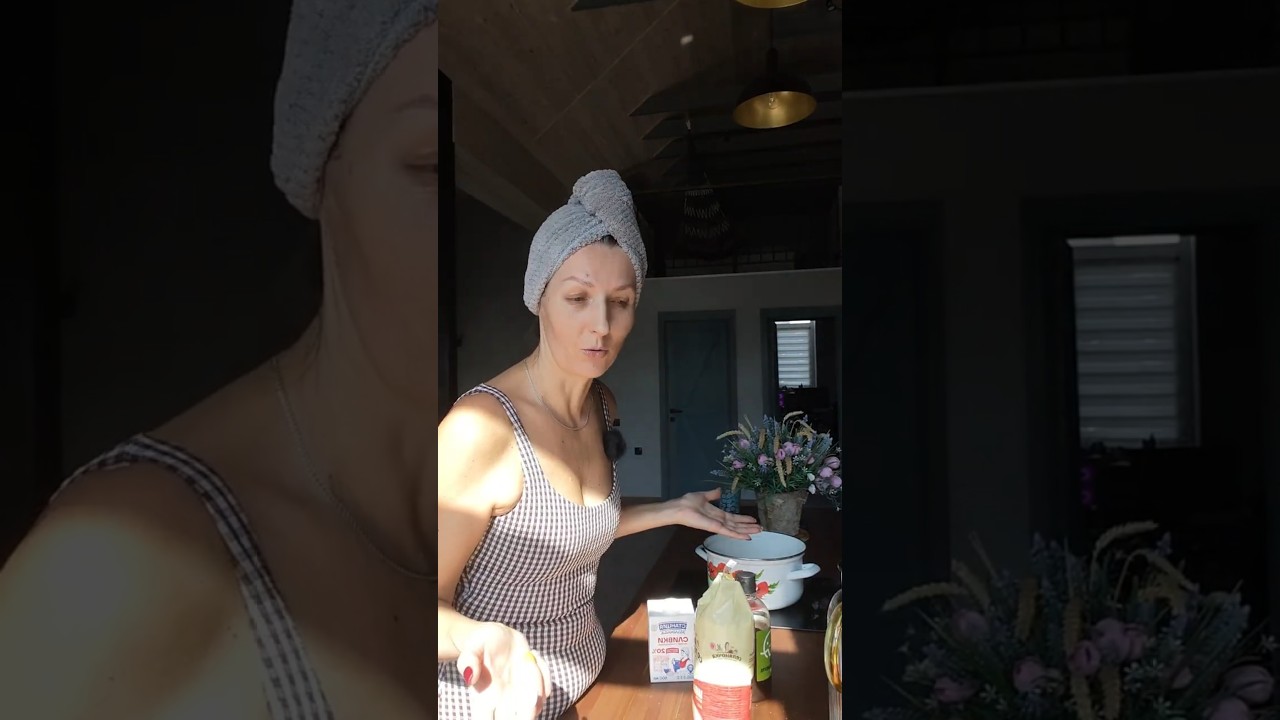
Hi, this is Mila, and today I’ll share my wonder recipe on the theme of “the taste of childhood.” “Who remembers that childhood when you didn’t like semolina porridge?” I ask — and immediately admit: I loved it very much as a child. Now in our family that same porridge is made “with an upgrade”: on cream, with Jerusalem artichoke syrup instead of sugar, and mango on top. “The taste of childhood, only with an upgrade” — that’s what I call it. Let’s break this morning recipe down by its parts: what changes in the classic, why Jerusalem artichoke syrup is needed, and how to bring back a favorite childhood breakfast without extra sugar.
My recipe: childhood porridge with an upgrade
There are no exact gram measurements in the video — I cook the porridge “as usual” and add the semolina “by eye.” But the upgrade list is specific:
- semolina porridge cooked the usual way, with constant stirring;
- 20% cream — “I’ll cook the porridge with cream”;
- Jerusalem artichoke syrup instead of sugar — “there’s less sugar in it, after all”;
- mango in cubes — “it goes into the porridge,” before anyone eats it;
- syrup added after tasting — “it didn’t come out sweet,” so I pour in more.
The result: “very interesting taste, with the mango” — that’s how they rate it in the family. And I add: “So it’s really tasty. So the morning is really a good one.”
Why the upgrade works
Semolina porridge remains the most divisive porridge among adults: for some there are warm memories of kindergarten with fruit drinks, for others — “lumps and hatred.” The upgrade from the video solves both problems at once.
Jerusalem artichoke syrup instead of sugar
Jerusalem artichoke syrup is traditionally used as a milder alternative to white sugar: it contains inulin, a dietary fiber that is being studied in the context of supporting the gut microflora. It’s important to be honest: it’s still a sweetener, and we’ll come back to moderation in the cautions.
Cream instead of water or milk
Cream makes the porridge heartier and “longer” in terms of satiety: fat slows the absorption of carbohydrates, and such a breakfast keeps you full longer than porridge made with water. It’s the simple logic of “food that feeds you” — and that’s exactly why porridge with cream is perceived as a dessert, even though it stays a breakfast.
Mango instead of jam
Mango cubes give sweetness and a tropical flavor without added sugar, and they are also traditionally considered a source of carotene. Fresh fruit in porridge is the simplest way to turn “kindergarten classic” into a modern breakfast.
How to fit it into life: five steps
- Cook the porridge the usual way — there’s no need to change the childhood recipe entirely, the details are enough.
- Stir constantly: that’s exactly how the porridge comes out without lumps in the video.
- Add the Jerusalem artichoke syrup after cooking, to taste — like me: I tasted it, “not sweet,” poured in more.
- Add fruit fresh and at the end: mango, banana or seasonal apples — whatever is in the house.
- Eat slowly: “the taste of childhood” opens up only if breakfast is a ritual, not a snack on the run.
Cautions
- Gluten. Semolina contains wheat protein: with gluten intolerance or celiac disease, such porridge is not suitable.
- Syrup is still sugar. Jerusalem artichoke syrup is milder than white sugar, but it’s not “free”: moderation matters for everyone, and people with diabetes should discuss sweeteners with their doctor.
- 20% cream. Hearty grows together with calories: a portion, not a bowl. For children — according to age and their usual diet.
- Allergy. Mango and dairy products are possible allergens: if something doesn’t suit you, the fruit is easily replaced with a banana, and the cream with milk.
The taste of childhood is a way of caring for yourself
A craving for childhood porridge is not a whim but a turn toward pleasant memories: food knows how to return us to moments when we were fed and protected. Psychologists in this sense speak of “comfort food,” and bringing back favorite dishes in an adult form is a healthy way of caring for yourself. I explore this topic more deeply in the material about working with the inner child — childhood porridge is a small gift to it.
And if you’re building morning rituals, I have one more short everyday option — a morning ritual with lemon and olive oil. Watch how the family tries “the taste of childhood with an upgrade,” and write in the comments which fruit you’d add to your semolina — I read every comment )



