


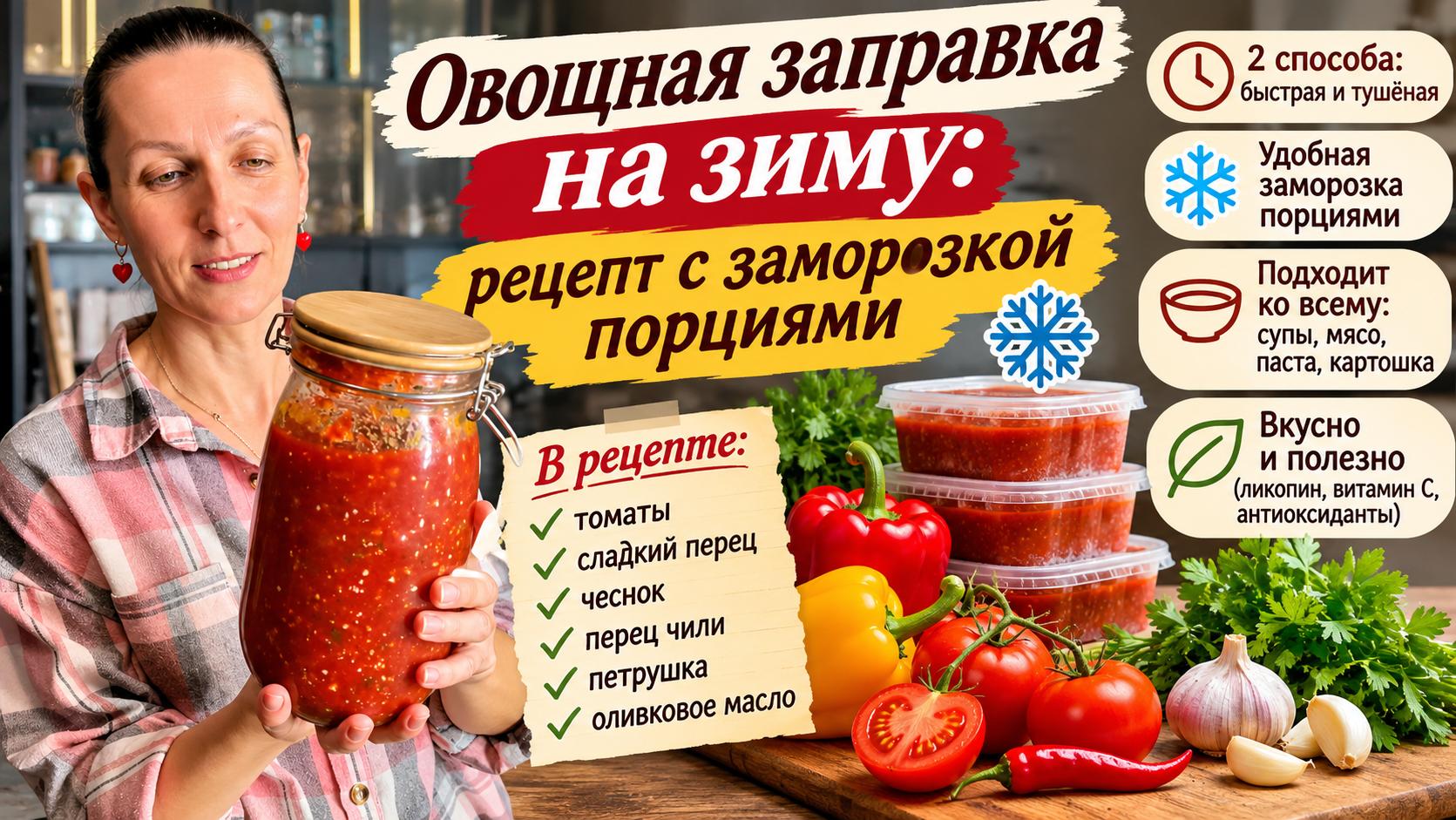
There are things worth making once and using all winter. Hi, I’m Mila, and today I’ll share my go-to recipe — a tomato-and-garlic seasoning with pepper and a spicy little kick: “you want to add it to literally everything: eggs, meat, pasta, potatoes, soups and even just spread it on bread.” It’s made two ways — a quick one for the fridge and a stewed one for storing — and I came up with a clever way to keep it: not in jars, but in portions in the freezer. The full recipe with proportions is below.
The recipe for a stewed seasoning to store
The exact proportions from the video description — for a 1.5-liter jar:
- tomatoes — about 1.3 kg;
- bell pepper — 2 pcs;
- garlic — 6 cloves;
- chili pepper — 1 pod;
- parsley — 1 bunch;
- olive oil — 70–80 ml;
- salt and pepper — to taste.
Chop the tomatoes and pepper, mince the garlic and herbs, combine everything and stew until done. The consistency is a thick, fragrant paste-sauce: I show the jar of finished seasoning and laugh: “Just take it, you can eat it by the spoonful, you can even spread it right on bread.”
Two ways: quick and stewed
- Quick — for the fridge. The same everything, without stewing: chop, mix, store in a jar in the fridge for a few days. Fresh, bright flavor — for the coming week.
- Stewed — for storing. A short boil tames the freshness but makes the mix stable and concentrated: this is the version that goes into the freezer for the whole winter.
My trick: freezing in containers
The video starts from the final stage: the cooled seasoning is portioned into containers and sent to the freezer — “so there’s enough put away for the whole winter.” Why is this better than canning? First, no sterilization or vinegar: freezing is a preservative on its own. Second, portions: take out one container — use it up in one lunch, nothing goes to waste. Third, vitamins: quick freezing keeps them better than months in a warm pantry.
What you can make from the seasoning
- bolognese pasta — add it to the mince and stew;
- buckwheat, rice, potatoes — a spoonful of seasoning turns a side into a dish;
- soups — 5 minutes before the end of cooking;
- eggs and omelets — the sauce instead of sautéed vegetables;
- bread — just spread it, like ajika;
- meat — a marinade or a glaze when roasting.
Why a sauce like this is also a healthy habit
After a short stewing, tomatoes release lycopene — a carotenoid that is better absorbed from processed tomatoes and in the company of fats: the olive oil in the recipe works precisely for that. Garlic forms allicin when minced, the pepper adds vitamin C, and the parsley — vitamin K. In winter, when there are fewer fresh vegetables, a spoonful of such seasoning is a real portion of plant compounds, not a “flavor additive.”
Practical tips for storing it
Three details that make the process easier and the result more reliable:
- Containers — small. One container = one lunch: no need to dig in and put the rest back in the freezer.
- Cool it all the way. Hot seasoning doesn’t go into the freezer — the steam will turn to ice and warm up the neighboring food.
- Label it. In the freezer everything looks alike: write on the lid with a marker — “tomato seasoning” and the date.
Storage time with steady freezing is until spring; the heat of the chili softens a little over this time, and the flavor stays. Thaw it ahead of time — on a fridge shelf overnight, so the texture comes back without a microwave.
How to adapt the recipe to yourself
The proportions from the video are a frame, and inside it there’s freedom: you can put in half a chili pod if no one at home likes it spicy, and up the garlic to 8 cloves for the fans. The tomato base forgives experiments: a little basil instead of parsley turns the seasoning into an Italian version, and a tablespoon of sugar softens the acidity of winter tomatoes. The one thing not to change is the ratio of vegetables to oil: fats aren’t just for flavor, they carry the lycopene and keep the seasoning from freezing solid.
If you’re building your winter stock the way I do, next to the seasoning will stand a raw beetroot salad (the fresh line) and a magnesium mix from seeds (the base for breakfasts) — preserves plus freshness, so the menu doesn’t slide into winter monotony.
Save the recipe, share it with your girlfriends — and later you’ll thank me, I promise ) And if you have your own signature make-ahead sauce, tell me in the comments: I’m collecting ideas for next season.



