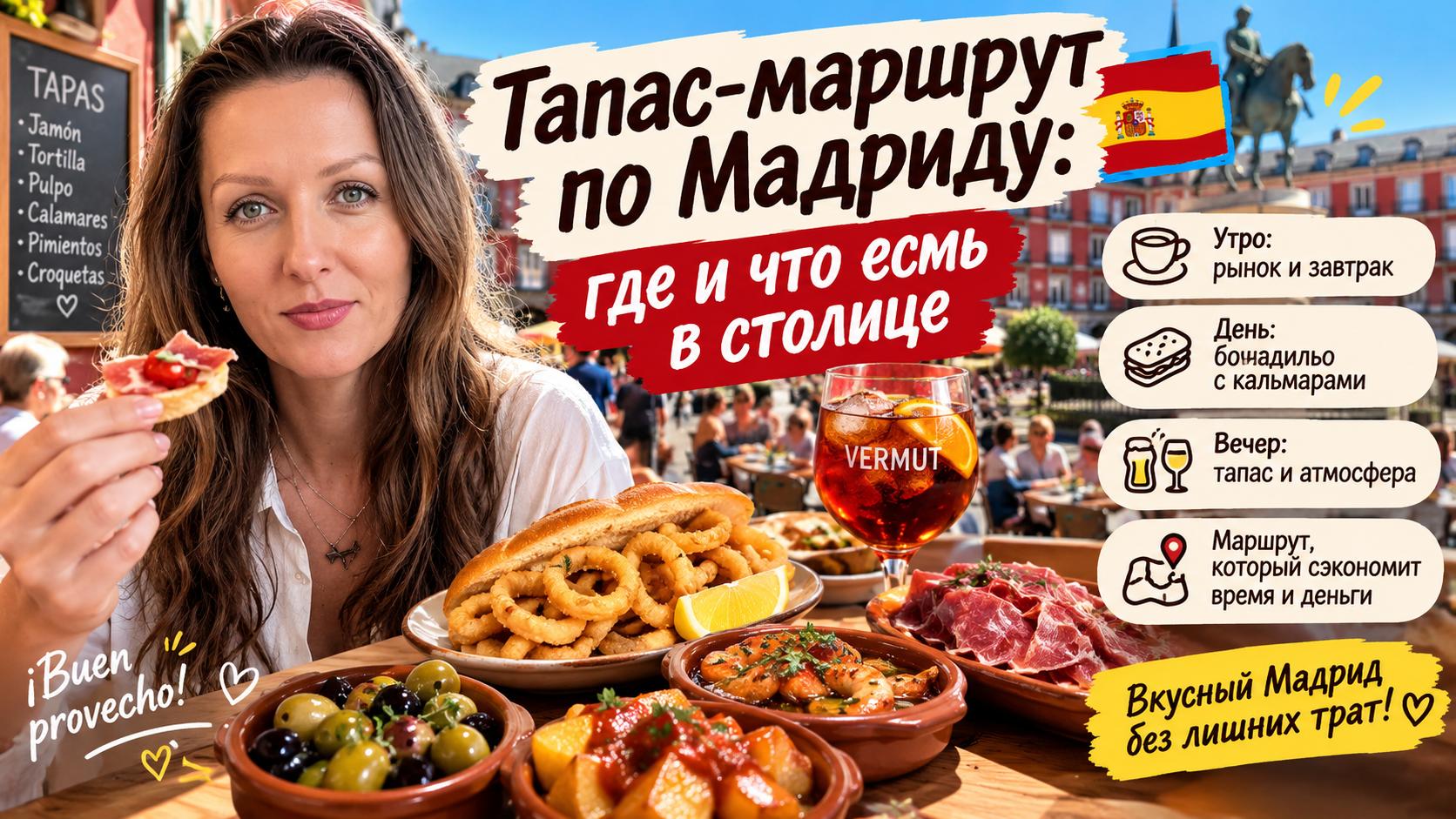
Madrid knows how to feed you so that the route turns into a game: from a morning market to an evening tapas quarter — one honest bite for every hour. Hi, I’m Mila, and today I’ll share my food route around the Spanish capital — no reservations, no big budget and no tourist markups. Let’s go: bring your appetite and comfortable shoes )
Morning: the market and a simple breakfast
The day starts at a food market: fresh fruit, cheeses, olives, and next door — a bar with coffee and tomato toast. Don’t skip the simple bars near markets: that’s where the vendors and the shoppers have breakfast, and that’s a good sign of quality. My order is this: coffee, toast, ten minutes of watching the traders — and only then the sights. Such a breakfast costs less than coffee on the front line by the square and keeps you full until evening. If the market has an olive stand — take a cup “to try”: local varieties are very different from the familiar canned ones, and picking a favorite is a pleasant task.
Daytime: the calamari sandwich
Madrid has a signature dish that tourists often miss: a bocadillo with fried calamari — a soft roll, rings of squid in batter, a drop of lemon. People eat it standing by the Plaza Mayor, and it’s not “street food for show” but a city classic for a couple of euros. Wash it down with vermouth or beer with lemonade — that’s what the locals do. If the day is warm, take a portion to go and eat it in the shade: simple food in the open air in this city is a small genre of art. And next to the sandwich classic live other “working” dishes — soups of the day and snacks on the counter: look where the builders and the office workers eat, and that’s where your lunch is.
Evening: tapas from street to street
- go to quarters where bars stand wall to wall — the evening turns into a marathon of “one bar — one snack”;
- order in small portions: a tiny tapa, a glass, a conversation — and on to the next;
- look at the counter: Galician octopus, little sausages, ham, tortilla — the hints are right behind the glass;
- don’t chase tables — at the bar it’s more atmospheric and faster;
- ask for “the most popular” — the bartender will happily tell you what everyone orders here;
- the final dessert — churros with thick chocolate: by the city’s opinion, an evening without them is unfinished )
My notes from a practical person
- “menu del día” — a fixed-price lunch menu: an honest way to have a full meal in the middle of the day;
- in popular bars you order at the bar and pay right away — don’t wait for a waiter at a table;
- hours matter: kitchens close between lunch and dinner, so plan a snack in advance;
- markups grow closer to the main squares — a couple of streets aside changes both the price and the taste;
- don’t order “everything at once”: tapas culture is about moving from bar to bar, not about a feast in one place;
- Friday evening is the peak: if you want calm, start earlier than the city starts to boil.
Food through which the city shows itself
In one day Madrid shows itself through food better than any guidebook: morning — markets and simple bars, day — the city classic with calamari, evening — lively tapas quarters. I described the sweet finale separately: churros with chocolate — a ritual without which you can’t understand Spain. And if you want to go deeper into the meat topic, look at the article about meat in Spain — about beef, ham and our habits at the counter. And one last thing: build some “empty” time into the route — the tastiest discoveries happen not by plan but by chance, at a counter where something was just brought out to the display.
And what was your food day in Madrid like — and what made it into your personal top list? Write in the comments: from your answers I’ll put together a crowd-sourced route and add my own to it.