


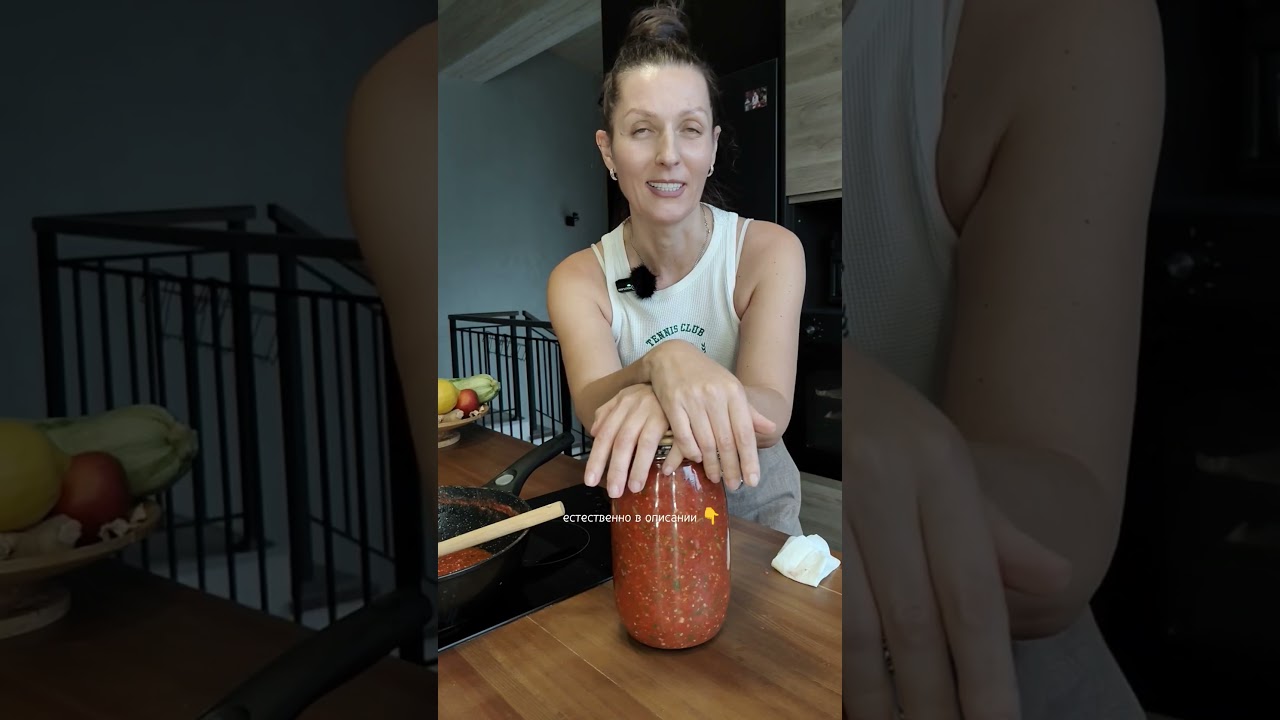
Hi, it’s Mila again, and today I’ll share a recipe for stewed vegetable seasoning for the winter — that find after which “you want to add it to literally everything”: to eggs, meat, pasta, potatoes, into soups and even just spread on bread. I make it two ways — a quick one for the fridge and a stewed one for storing — and in this video I show exactly the winter, jar version: 1.5 liters of fragrant seasoning with tomatoes, pepper, garlic and chili. Let’s take the recipe apart: the proportions, the short cooking and the important rules of safe storage.
My recipe: exact proportions
Ingredients for a 1.5-liter jar:
- tomatoes — about 1.3 kg;
- bell pepper — 2 pcs;
- garlic — 6 cloves;
- chili pepper — 1 pod;
- parsley — 1 bunch;
- olive oil — 70–80 ml;
- salt and pepper — to taste.
How I make it
- I chop the tomatoes and pepper, mince or finely chop the garlic, chili and parsley.
- I move everything into a pot and add salt and pepper.
- I bring it to a boil and cook it for another minute, then turn off the heat.
- After it has cooled, I add the olive oil and stir.
- I divide it into jars. Important: sterilize the empty jars!
Why this works
The short cooking is the main trick of this recipe: one minute of boiling scalds the vegetables but doesn’t turn them into a smooth puree, so the seasoning keeps a fresh taste and the pieces stay. Tomatoes, when heated, only open up their aroma — an effect familiar to everyone from tomato sauces, where cooked tomatoes give a deep “summer” taste even in winter.
Everything in the mix is put together according to the classic rules of tomato seasonings. Tomatoes contain lycopene and other antioxidants. The bell pepper and parsley add vitamin C and other useful substances — by the way, vitamin C from fresh vegetables is traditionally valued precisely in the cold season. The garlic and the chili are responsible for the bright taste and aroma, and the olive oil brings unsaturated fats and helps absorb the fat-soluble carotenoids from the same tomatoes and pepper — it’s a known principle: fat-soluble substances are absorbed better together with fat.
How to work it into your life
- Make the seasoning in tomato season, when they’re cheaper and more fragrant — the difference in taste is huge.
- Sterilize the jars in advance, while the mixture is cooking — the process goes faster.
- Label the jars with the date: in winter it’s so easy to tell which one is more recently opened.
- Use it as a universal booster: a spoonful of seasoning will wake up a morning omelet, an evening soup and any side dish.
- For an everyday version, look at the fresh one in the neighboring video — it comes together in the blender in minutes and keeps in the fridge.
Warnings
- Go easy on the chili. One pod in a 1.5-liter jar is already a noticeable heat: for a family with children, make a separate jar without chili.
- Sterilization is not optional. A dirty jar is the main reason preserves spoil; better to spend an extra ten minutes.
- Check the jars before opening. A swollen lid, mold, gas or an unusual smell are reasons to throw the contents away without tasting.
- Acidity and health. With gastritis with high acidity or reflux, tomato preserves often make the discomfort worse — go by how you feel.
A jar as a gift to yourself in February
There’s a special pleasure in a winter evening when a jar with summer inside comes out of the pantry: the aroma of garlic, parsley and tomatoes instantly turns a simple dinner into a “real” one. Preserving is care for your future self, and this recipe shows that it takes neither a day at the stove nor exotic products.
On my site there’s a related topic: a detailed article about vegetable seasoning for the winter — there the principles and variations are collected, and this recipe adds to them the exact proportions for a big jar. If after the seasoning you feel like adding fresh vegetables to your diet too, try the vitamin salad with raw beetroot.
Save the recipe for tomato season — and share in the comments what you add your seasoning to most often. I’m interested in your favorite combinations )



