


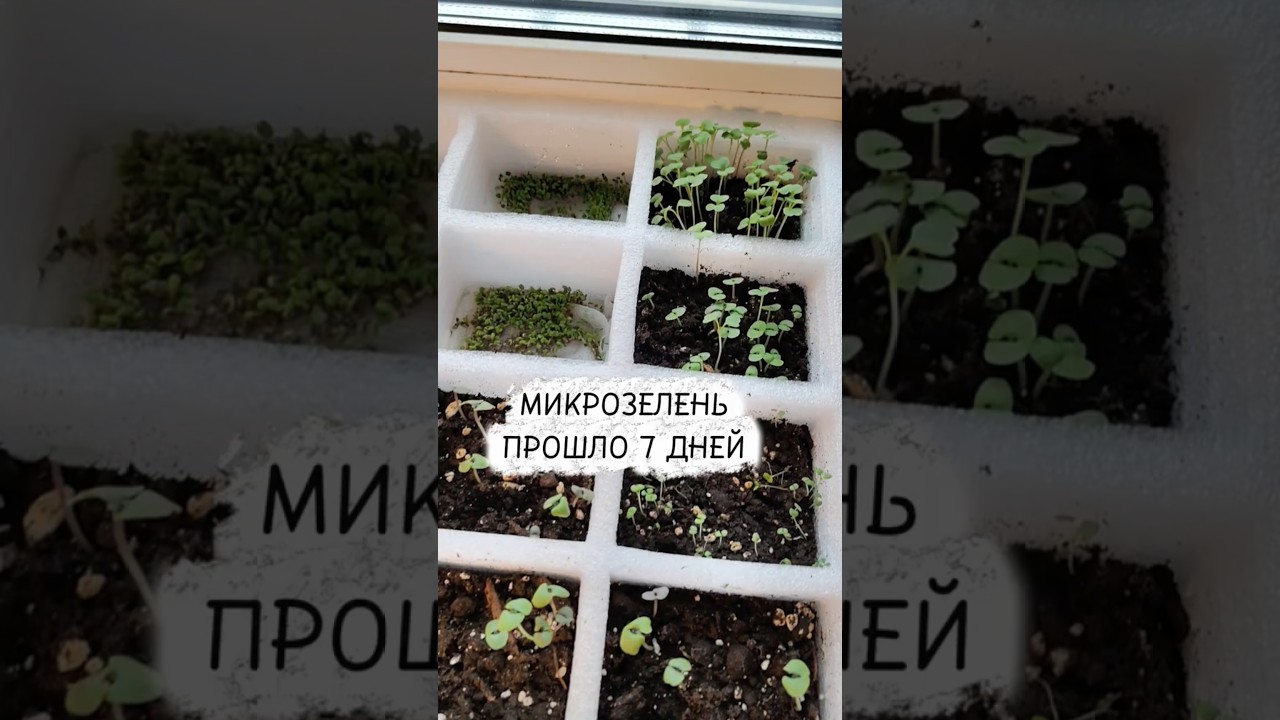
A week — and a whole mini-garden has grown on my windowsill: chia, arugula, beets, thyme, basil, dill and cilantro. Hi, this is Mila, and today I’ll show you the result of the first week and tell you about one more cutting I bought — rosemary. I’ll be using it for hair rinses. Let me break this experience down by its parts: what actually grew on my windowsill in a week, why rosemary belongs there, and how such a garden fits into ordinary life.
My experience: what grew on the windowsill in a week
There are no exact proportions in the video — this is not a recipe but an inventory of the mini-garden after the first week. Here is the full list of what I showed at home:
- chia — sprouts that were the first to be ready;
- arugula — a fresh sowing;
- beets — for microgreens;
- thyme — small, but already growing;
- basil and dill — the usual kitchen greens;
- cilantro — for sauces and salads;
- a rosemary cutting — bought specifically, for hair rinses.
I honestly assess the week’s result: the “mini-garden” worked out, the idea for winter is really fun, and I ask you: who already grows greens at home?
Why rosemary belongs on the windowsill
Rosemary is a separate story. I explain it this way: in our latitudes it doesn’t grow the way it does in Spain, where you can just “go and pick some in the mountains.” So the only way to have fresh rosemary at home is a cutting. It’s still small, but over time it will spread out, and then there will be enough of it for hair rinses.
What matters is that I tie rosemary to a specific task: I keep treating my hair, because “there’s still something to treat” — the hair loss isn’t fully stopped. I plan to make the rinse with dried rosemary specifically. This is a working example of how a houseplant is bought not for the beauty of the windowsill but for a concrete goal: a familiar care ingredient — permanently on hand and free. I’ve already broken down in detail how rosemary is used in home care in the article rosemary hair growth elixir.
Why this works
Microgreens are considered one of the most convenient home sources of fresh greens: young sprouts gain mass quickly, and they need neither a large volume of soil nor complicated care — just water, light and the warmth of the windowsill. Fresh sprouts are traditionally valued for the vitamins and minerals that are harder to get from a “store-bought” leaf in the winter months: greens picked a minute before a meal are always fresher than any delivery.
Herbs on the windowsill also work as a replacement for store-bought bunches. Dill, cilantro and basil in pots live for weeks and give their harvest in portions rather than all at once: you cut a sprig — the rest keep growing. For the family budget that’s a noticeable saving, and for the habit of eating greens every day the threshold is zero: they’re literally at hand.
Rosemary in this system is a “slow” player. It grows for years, and its value lies elsewhere: one purchased cutting turns into a permanent source of raw material for rinses and decoctions. This is the classic strategy of a practical homemaker: annual crops feed the table, perennials work for the bathroom shelf.
How to fit it into life
- Start with two or three crops, not ten: chia and arugula sprout quickly and give the first motivation.
- Give the greens a permanent spot on the brightest window — moving them around slows growth.
- Water little and regularly: microgreens like moisture, not a swamp.
- Buy one “slow” cutting for your own task — rosemary for hair, mint for tea, basil for sauces.
- Cut as needed and note what actually gets eaten: the next batch of sowing — only from your favorite crops.
Cautions
- Dry air and the radiator. In winter the windowsill dries the soil fast — check the moisture with your finger, not by the schedule.
- Rosemary doesn’t like overwatering. It’s a Mediterranean plant: it handles drought more easily than water sitting in the pot.
- Hair rinses are a test, too. Before a new herbal rinse, do a skin patch test: even familiar herbs cause a reaction in some people.
- Don’t mix sowings in one container. Different crops have different watering rhythms — it’s easier to keep them in separate cups.
The mini-garden on the windowsill has one more pleasant side: it’s five minutes of caring for something alive every day. You turn away — the sprouts reach for the light; you come back — they’re a couple of centimeters taller. The body gets fresh greens, the eyes get the green color you rarely see in winter, and the mood gets confirmation that small regular actions do yield a harvest.
Tell me in the comments what grows at your place in winter: chia, dill, or maybe rosemary for rinses, too. Save my idea for yourself — and share it with a friend who has long dreamed of her own winter garden )



