


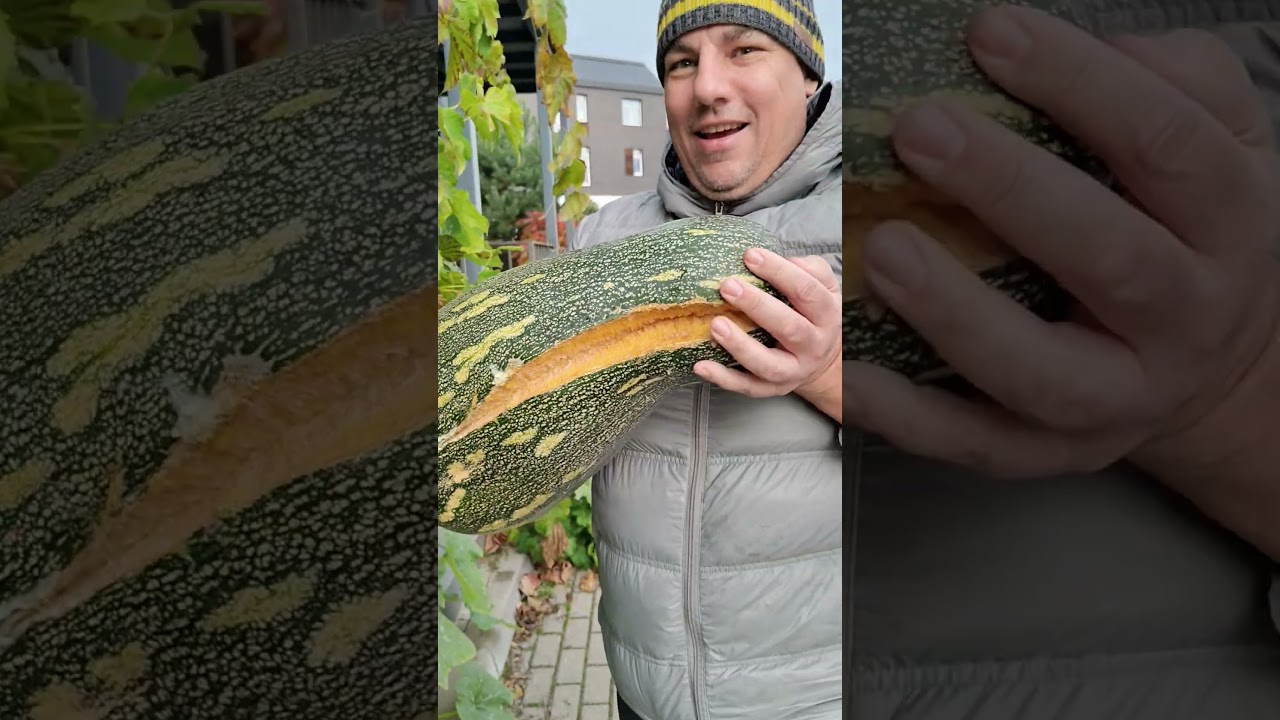
Hi, I’m Mila, and today I’ll tell you about the biggest pumpkin of my life. “I’m in shock! It’s the first one that grew like this” — together with my family I’m taking a giant pumpkin off the bed, exactly 9 kilos: huge, beautiful and cracked — so overripe that waiting any longer was no longer possible. The video is short and cheerful, but there’s a real practical drama of the autumn garden in it: what to do with a pumpkin of that size and why a cracked one can’t be stored. Let’s break it down: the story of the giant, the rules for handling large pumpkins, and a plan for processing “nine kilos of goodies.”
My pumpkin gigantus
The script of the video is very homey. We waited for the pumpkin to ripen, and it turned out that it had cracked — so overripe that the skin split. We take it off the bed, admire it: “Here’s how huge it grew for us. Honestly, just a gigantus.” Then the weighing — and exactly 9 kilos: “Unbelievable.” The final verdict also pleases the practical ones: “Now we’re going to have pumpkin recipes. All right, the pumpkin has ripened, let’s cook.”
What matters in this story: the crack is not cosmetic but a signal. Through a break in the skin, bacteria and rot get inside easily, so an overripe cracked pumpkin can’t be put away for long-term storage — it’s processed first, fully or partly, while the quality of the flesh is still excellent.
Why this works: the logic of the autumn pumpkin
The pumpkin is one of the most long-living vegetable crops: whole and undamaged, it traditionally keeps for months in a cool place. But the rule only works for whole fruits with unbroken skin. Any crack is an open door for microorganisms, and the bigger the fruit, the longer it ripens and the higher the chance that by harvest time the flesh is already past its peak. Hence the autumn principle: large and damaged fruits — into processing now, whole ones — into storage.
The second principle is size. Nine kilos isn’t “one dinner,” it’s a product that needs to be divided. Pumpkin takes well to freezing as cubes and puree, and goes beautifully into soups, porridges and baking — that’s why a rational processing plan turns the “gigantus” into a week’s worth of ready-made preparations, and not into a sad rotting ball on the balcony.
How to work it into your life: a plan for 9 kilos
- Process the cracked fruit in the first days: cut out the area with the crack with a margin, and judge the rest of the flesh by smell and look.
- Divide the pumpkin into batches: part into cubes for the freezer, part into puree, a little for the nearest dinners.
- Blanch the cubes or freeze them raw and loose on a tray, then pour them into bags — that way they won’t stick together.
- Roast half and make puree: it takes less space in the freezer and is ready for porridges and baking.
- Smaller whole pumpkins — for storage: a cool, ventilated place, stems on, fruits not touching each other.
Warnings
- Flesh with an off smell, soft wet patches or mold — into the bin. Dubious and “just a little” — also into the bin: a pumpkin isn’t the product to take risks with.
- Don’t store cracked fruits. Even a beautiful crack is potential rot in a week or two.
- Freezing changes texture. Thawed pumpkin is softer than fresh — leave it for soups, purees and baking, not for salads.
- A knife and a giant pumpkin — carefully. It’s better to cut a huge fruit on a stable surface, with small cuts.
The body and your state
A 9-kilo pumpkin is not about a record but about seasonality. The garden regularly brings “too much” — and this surplus is exactly what it was all started for: to pull your own cubes out of the freezer for soup in winter is a small event that warms no less than a blanket. The harvest teaches you to plan, to divide and to enjoy the process, not only the result.
Continue the preserving theme with a related article about vegetable seasoning for the winter — jars of tomatoes and frozen pumpkin are made in one autumn weekend. And if, after the garden joys, you want to get to the actual kitchen, start with the guide on how to sprout fenugreek at home: fresh greens go beautifully with pumpkin soups.
Tell me in the comments: what was the biggest pumpkin you ever grew — and how did its story end? I read every comment )



