


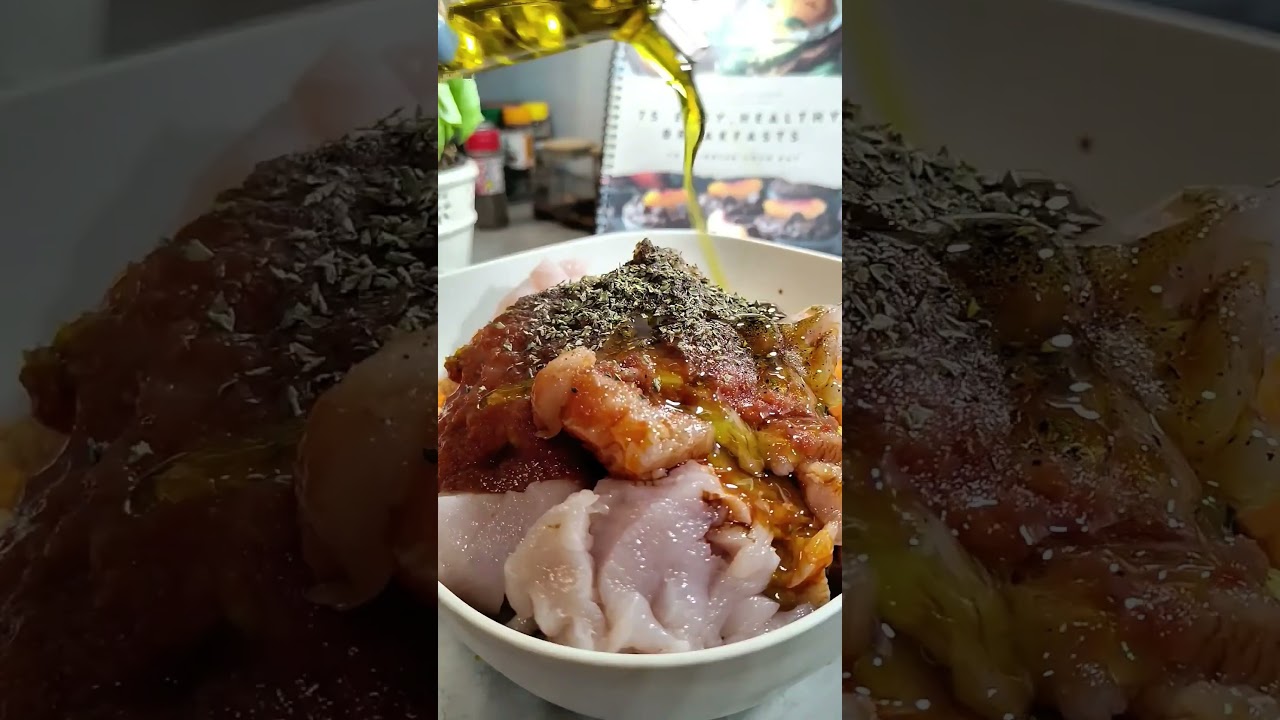
“What vegetables do you have? Zucchini, eggplant, marrows, carrots — everything goes on the tray” — that’s my main principle of roasted vegetables with chicken: the tray takes whatever grew in the garden. Hi, it’s Mila again, and today I’ll tell you about a dinner that saves me all week: the breast comes out very soft, and the dish is tasty even cold. I’ll break the experience down: what the secret is, and how to fit it into an ordinary week.
A dish by principle, not by grams
I don’t name exact proportions in the video — and that isn’t vagueness, it’s the method itself. Roasted vegetables with chicken is a formula that each family adjusts to its own fridge:
- the vegetable base — everything seasonal: zucchini, eggplant, marrows, carrots;
- the meat part — chicken breast, which stays soft when roasted;
- everything is cut, combined and roasted in the oven until done;
- and the bonus I emphasize separately: the dish is tasty even cold.
It’s exactly the cold version that makes this dish strategic: you can take it with you, build a lunch box, serve it the next day without reheating — and it won’t fall apart or lose its flavor. “Can you imagine how good this is?” — I ask in the video, and that’s the best announcement of the recipe.
Why it works
Roasting is one of the friendliest techniques for a light way of eating. The vegetables cook almost without oil, keeping their shape and flavor instead of being boiled out in water: the fiber stays structured, and part of the vitamins is lost less than with long boiling — a basic feature of the method, familiar from the basics of nutrition.
Chicken breast is the reference source of protein with minimal fat. In pair with vegetables it closes the formula of a hearty plate: the protein gives long-lasting fullness, the vegetables give volume and fiber, and the roasted crust gives the pleasure without which any “correct” food risks becoming boring.
From this comes the practical meaning of the “cold” mode: protein and fiber remain a filling pair even without reheating, and the flavor of the roasted vegetables even opens up after a night in the fridge — the spices have time to spread through the dish. That’s exactly why a tray “for two days” is a working tactic, not laziness.
How to fit it into your life
- Do a vegetable audit at the end of the week: everything that has started to “look tired” goes on the tray.
- Cut it large — then the vegetables don’t turn to mush and hold their shape even the next day.
- Roast two portions at once: for dinner and for a lunch box — the cold version works straight from the fridge.
- Change the vegetable mix with the season: the “whatever there is” formula saves you in autumn and in summer.
- Serve with herbs or a spoon of yogurt sauce — then dinner feels finished.
Cautions
- The chicken must be fully cooked — watch that the meat isn’t left pink inside.
- Eggplant causes an individual reaction in some people — try a little the first time.
- During a flare-up of digestive problems, it’s better to replace roasted vegetables with stewed ones — they’re softer.
- Don’t salt the “for tomorrow” part in advance: salt the portion right before serving.
Body and state
There’s something bigger in this dish than saving time. A tray where different vegetables come together is a handy metaphor for eating without perfectionism: we take what there is and make it tasty. Such a calm approach to food goes well with a calm evening: after a light dinner the body isn’t overloaded, and falling asleep is easier. I stock up my vegetable base for the future according to the material on winter vegetable seasoning, and in the evening, when the day has been noisy, a grounding technique saves the day.
Try to put your own tray together this week and tell me in the comments which vegetables end up in yours most often — I read every review. I’m interested in what seasonal combination you come up with.



